
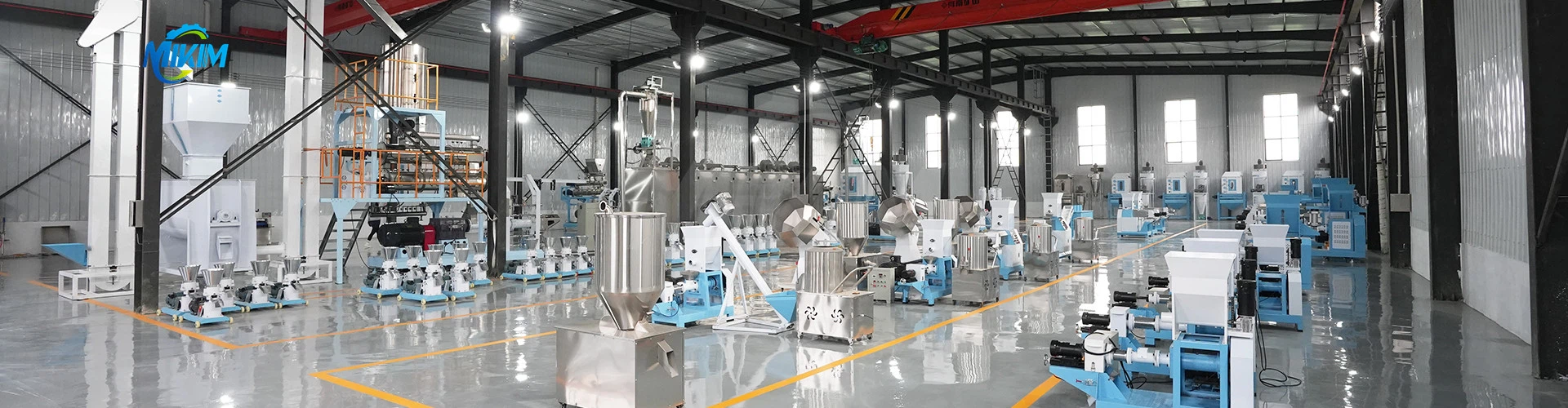
Feed processing, a skill that has gone through thousands of years, has gradually evolved from simple manual operations to today's highly mechanized and automated industrial system. In ancient times, grains may have been roughly ground for consumption by poultry and livestock. However, with the vigorous development of the animal husbandry industry, feed processing has begun to move in a more precise and scientific direction. Countries with developed animal husbandry took the lead in embarking on the modernization journey of feed processing and established feed factories one after another. They are no longer satisfied with traditional handicrafts, but use the power of science and technology to carefully design various feed formulas according to the nutritional needs of livestock and poultry. Such changes not only move feed processing from manual to mechanized, but also move the entire industry toward automated, computer-controlled industrial production. With the advancement of technology, feed processing technology and equipment are becoming increasingly perfect, and the technical level continues to improve. The scale of production is expanding day by day, and the types of products are becoming more abundant. All these changes have significantly reduced the cost of feed production and injected strong impetus into the development of animal husbandry.

| Model | Capacity (kg/hr) | Power(KW) | Weight(kg) | Dimension (cm) |
| MK-125 | 80-100 | 3 | 95 | 110*35*700 |
| MK-150 | 110-150 | 4 | 98 | 115*35*80 |
| MK-210 | 200-300 | 7.5 | 280 | 115*45*95 |
| MK-230 | 350-450 | 11 | 300 | 138*46*100 |
| MK-260 | 500-600 | 15 | 315 | 130*53*105 |
| MK-300 | 700-800 | 22 | 600 | 145*62*120 |
| MK-360 | 800-900 | 22 | 795 | 160*67*145 |
| MK-400 | 1000-1200 | 30 | 1000 | 160*67*145 |
Compared with mixed powdered feed, feed produced using a feed pellet machine can achieve higher economic benefits. This is because the feed pellet machine can fully mix various feed ingredients, improve the uniformity and stability of the feed, thereby reducing waste and losses. During the pressing process, the feed pellet machine generates high temperature and high pressure, which makes the feed have a rich pasty aroma and a hard texture, which is in line with the characteristics of rodent animals such as pigs, cattle, and sheep. This not only improves the palatability of the feed and makes it easier to eat, but also increases the nutrient absorption conversion rate by 300%, making it non-toxic and sterile. In addition, the feed pellet machine can be used to briquette agricultural waste such as straw, doubling its volume, making it easier to store and transport it for a long time. This not only solves the problem of disposal of waste such as straw, but also brings considerable economic benefits to farmers and enterprises.