
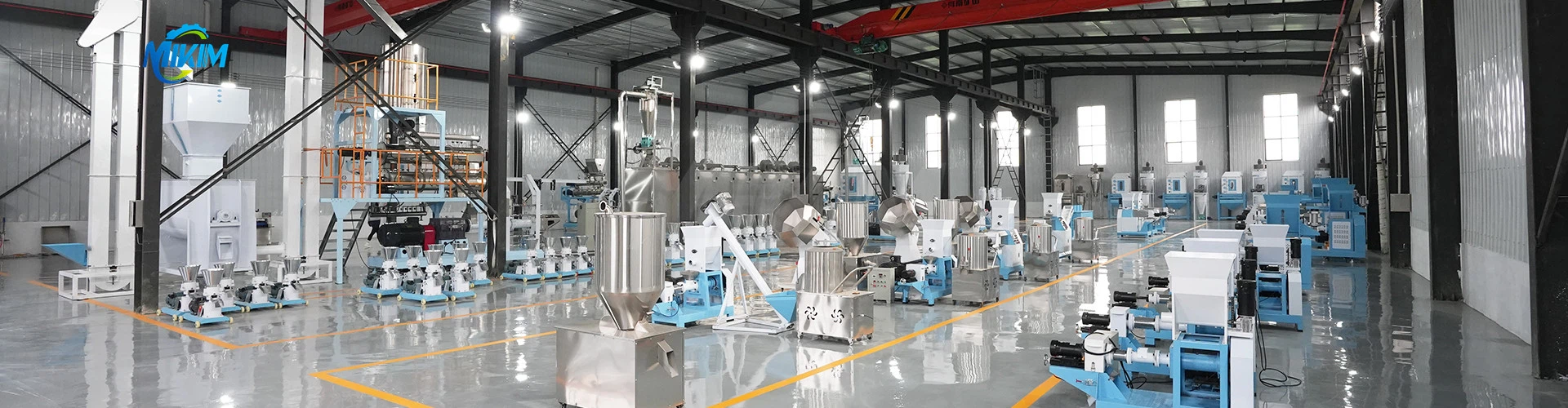
Ruminant feed production line is a typical example. This production line not only improves the efficiency of feed production, but also improves the product quality of feed, and plays a key role in promoting the development of the ruminant industry.
Ruminant feed production line is a highly automated production equipment that can accurately calculate the required feed ingredients and proportions according to the growth stage and nutritional needs of ruminants, and then convert these raw materials into high-quality feed through a series of processing steps. The main parts of this production line include crushing system, mixing system, drying system, packaging system, etc.

|
Model |
Capacity |
Dimension |
Weight |
|
MK-125 |
80-100kg/h |
110*35*70 cm |
95 kg |
|
MK-150 |
120-150kg/h |
115*35*80cm |
100 kg |
|
MK-210 |
200-300kg/h |
115*45*95cm |
300 kg |
|
MK-260 |
500-600kg/h |
138*46*100cm |
350 kg |
|
MK-300 |
700-800kg/h |
130*53*105cm |
600 kg |
|
MK-360 |
900-1000kg/h |
160*67*150cm |
800 kg |
|
MK-400 |
1200-1500kg/h |
160*68*145cm |
1200 kg |
| 1.Used for making animal feed pellets
2.Used for making wood pellets as fuel 3.Raw material size need 3-5mm ; Humidity :10-12% |
|||
First, the crushing system is the starting point of the ruminant feed production line. It crushes raw materials such as grains, beans, cellulose, etc. to a degree suitable for subsequent processing. This process usually requires the use of a high-speed rotating grinder or hammer mill to ensure that the raw materials can be evenly crushed.
Next, the mixing system mixes the crushed raw materials. This process usually requires the use of a vertical mixer or a horizontal mixer to ensure that the raw materials can be evenly distributed during the mixing process. At the same time, the mixing system can also add appropriate amounts of other additives such as minerals, vitamins, etc. as needed to meet the nutritional needs of ruminants.
Then, the drying system dries the mixed feed. This process usually requires the use of a hot air dryer or a vacuum dryer to ensure that the feed can reach the ideal moisture content in a short time. The drying process not only prevents the feed from deteriorating, but also increases the storage period of the feed.