
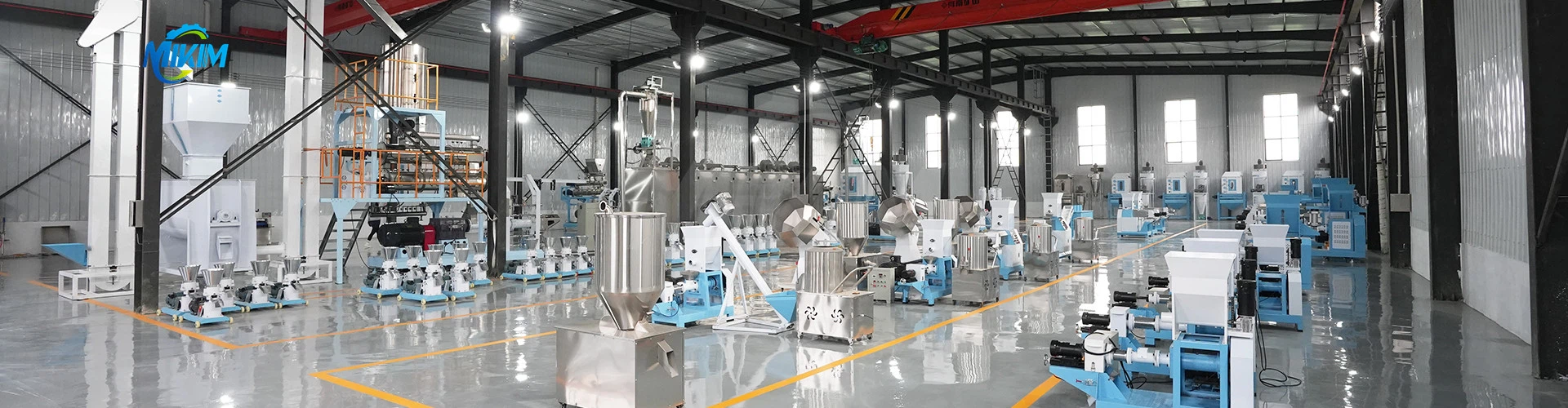
The pellet machine in intelligent breeding tools is a typical representative. With its unique advantages, it is gradually changing the production methods and efficiency of animal husbandry.
First of all, the accuracy of the pellet machine is one of its most significant advantages. Traditional feed preparation methods usually rely on manual labor, which is not only time-consuming and labor-intensive, but also difficult to guarantee the specifications and quality of each grain of feed. However, the use of pellet machines can mix various raw materials such as grains, beans, etc. in proportion and make them into consistent pellets, which greatly improves the quality and uniformity of feed, thereby improving the growth effect of animals.

| Model | Capacity | Power | Dimension |
| 125 | 80-100kg/h | 3kw | 110*35*70 cm |
| 150 | 120-150kg/h | 4kw | 115*35*80cm |
| 210 | 200-300kg/h | 7.5kw | 115*45*95cm |
| 260 | 500-600kg/h | 15kw | 138*46*100cm |
| 300 | 700-800kg/h | 22kw | 130*53*105cm |
| 360 | 900-1000kg/h | 22kw | 160*67*150cm |
Secondly, the high efficiency of the pellet machine is also its outstanding advantage. Compared with the traditional manual feed, the pellet machine can produce feed on a large scale in a short time, and the production process does not require human participation, which greatly saves labor costs. In addition, the pellet machine can also accurately control the production process through the automatic control system to ensure that each step is carried out according to the predetermined parameters, further improving production efficiency.
Furthermore, the pellet machine also has the advantage of easy management. Using the pellet machine to make feed can not only facilitate the quantitative supply of feed, but also facilitate inventory management and feed traceability. This is of great significance for modern animal husbandry, especially large-scale breeding.
Finally, the pellet machine also helps environmental protection. Compared with the traditional manual feed, the pellet machine can make better use of raw materials and reduce waste in the feed production process.