
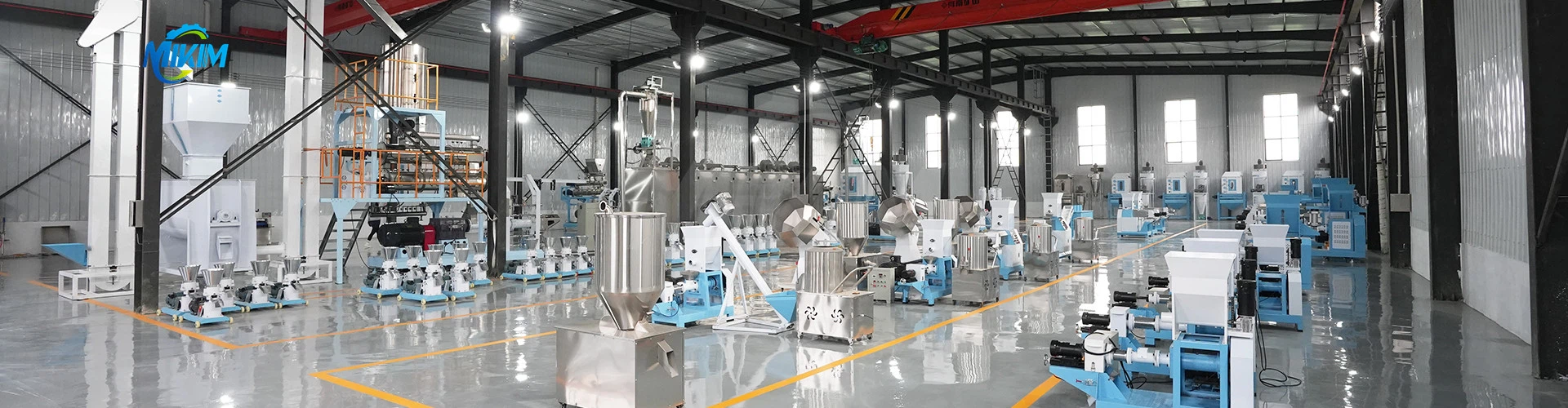
Most farmers think that the use of feed pellet machines is very simple. They only need to select according to the type of poultry and then operate it. However, the actual use of a feed pellet machine is not as simple as it seems. During the entire process from loading to discharging, you need to pay attention to the following points: First, the crushing particle size of the material is one of the important factors that need to be paid attention to during the use of the feed pellet machine. According to the different feeding attributes of animals, the particle size of the feed pellet machine during the pelleting process is also different. Farmers often have misunderstandings about how materials should be crushed and granulated.

| Model | Power | Capacity (kg/h) | Dimension(mm) | Weight |
| MK-120 | 3KW | 80-100 | 750*310*620 | 100 kg |
| MK-150 | 4KW | 150-200 | 770*340*680 | 115 kg |
| MK-210 | 7.5KW | 220-300 | 1000*430*950 | 210 kg |
| MK-260 | 15KW | 400-500 | 1200*500*1030 | 370 kg |
| MK-300 | 22KW | 600-700 | 1320*530*1070 | 480 kg |
| MK-360 | 22KW | 800-1000 | 1600*670*1450 | 800 kg |
| MK-400 | 30 KW | 1200-1500 | 1600*800*1700 | 1000 kg |
Generally speaking, when crushing conventional materials, it is more appropriate to have a pressing diameter of about 6 mm. If you need to make particles with special poultry properties, the material can be crushed into particles less than 6 mm. For general conventional feed, the pressed diameter should be within the range of 6 mm. Secondly, feed pelleting moisture is also a key factor that needs attention. Many farmers do not consider the moisture issue when using feed pellet machines to pellet, resulting in soft and shapeless pelletized products and poor animal feedability. In fact, the finished pelleted feed is pelleted using the principle of dry in and dry out, and the requirements for moisture are very strict. It is recommended that farmers control the moisture content of the material at about 13% when using a feed pellet machine, so that the pressed pellets will be fuller and the finished product will be better.
Finally, uniform feeding is also an issue that is often overlooked during the use of feed pellet machines. The uniform speed of feeding directly affects the normal operation of the pellet machine. If the material is loaded too fast, the machine will be overloaded and may even be damaged. If the feeding is too slow, the inside of the pellet machine will run empty, affecting work efficiency. Therefore, farmers should pay attention to feeding the feed at a uniform speed when using the feed pellet machine to ensure the normal operation of the pellet machine and improve its working efficiency.
Our packaging
