
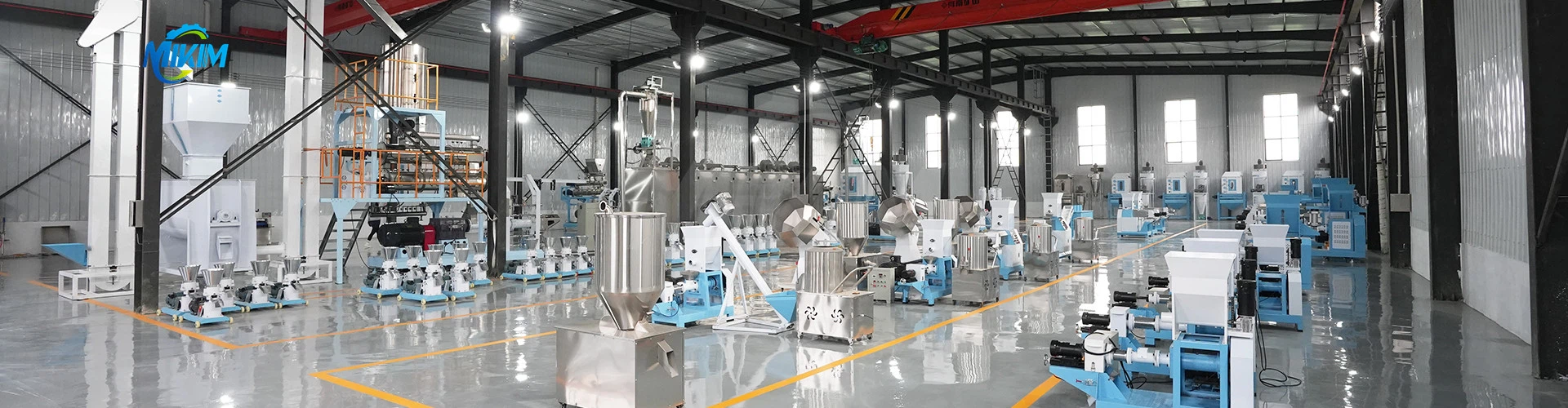
1. Understand farming needs:
Type of farmed animals: Different farmed animals have different needs for feed. For example, poultry, aquaculture, etc. require different types of feed. When choosing equipment, you need to fully consider the main farming business of the farm.
Farming scale: The size of the farm is directly related to the selection of equipment. Large-scale farming usually requires higher capacity and more advanced production line equipment.

| Model | Capacity | Power | Dimension | Weight |
| 125 | 80-100kg/h | 3kw | 110*35*70 cm | 95 kg |
| 150 | 120-150kg/h | 4kw | 115*35*80cm | 100 kg |
| 210 | 200-300kg/h | 7.5kw | 115*45*95cm | 300 kg |
| 260 | 500-600kg/h | 15kw | 138*46*100cm | 350 kg |
| 300 | 700-800kg/h | 22kw | 130*53*105cm | 600 kg |
| 360 | 900-1000kg/h | 22kw | 160*67*150cm | 800 kg |
| 400 | 1200-1500kg/h | 30kw | 160*68*145cm | 1200 kg |
2. Consider production scale and capacity:
Appropriate capacity: According to the actual needs of the farm, choose production line equipment with appropriate capacity. Considering future business expansion, the capacity of the equipment must also have a certain degree of redundancy.
3. Flexibility and versatility of equipment:
Adjustable production line: Choose production line equipment with a certain degree of flexibility that can adapt to the production of different types and specifications of feed. Multifunctional equipment can handle different raw materials and production requirements.