content
Core Structure: Understanding the 3 Core Components and Fundamentals of Working Principles
The working principle of a pet food extruder machine relies on the coordinated operation of three core components. Understanding the function of each component is crucial for comprehending its working logic.
First, the screw, as the core power component, comes in single-screw and twin-screw versions. Through high-speed rotation (150-220 rpm), it pushes and extrudes the raw materials forward, generating high pressure.
Second, the barrel, working in conjunction with the screw, contains an internal heating device that precisely controls the temperature (120-160℃), providing a high-temperature environment for the maturation and extrusion of the raw materials.
Third, the die head, with different orifice diameters that can be changed as needed, is the key component in forming feed pellets of different shapes and sizes after extrusion. In addition, auxiliary components such as the feeding device, cooling device, and control system ensure the stable operation of the dog food extruder machine.


Working Principle: Analyzing the Working Logic of a Pet Food Processing Machine Through 4 Key Aspects.
The working process of pet food extrusion equipment is essentially a closed loop of "raw material pretreatment - extrusion cooking - puffing and shaping - cooling and setting," with each of the four stages being indispensable. The core principle revolves around "high-temperature, high-pressure puffing."
The process involves four main stages:
1) Raw material pretreatment: Pet food ingredients (meat, grains, vegetables, etc.) are crushed, mixed evenly, and their moisture content adjusted to 16%-19% to ensure suitability for extrusion puffing. This is fundamental to achieving optimal puffing results.
2) Extrusion curing: The pretreated raw materials enter the pet food making machine barrel, where they are compressed under screw extrusion. Simultaneously, the barrel is heated, causing starch gelatinization and protein denaturation, forming a plasticized material mass. This process also kills harmful microorganisms in the raw materials.
3) Puffing and forming: The plasticized material mass is pushed to the die head. Due to the narrow die head aperture, the material is instantly released from a high-pressure environment to a normal-pressure environment. Internal moisture rapidly vaporizes and expands, forming a porous structure. Simultaneously, it is shaped into granules or strips by the die head.
4) Cooling and shaping: The puffed granules are at a relatively high temperature (80-100℃) and need to be cooled to room temperature using a cooling device to solidify the porous structure and prevent the granules from regaining moisture or collapsing. After cooling, they are ready for packaging and storage.
Finished Product Display


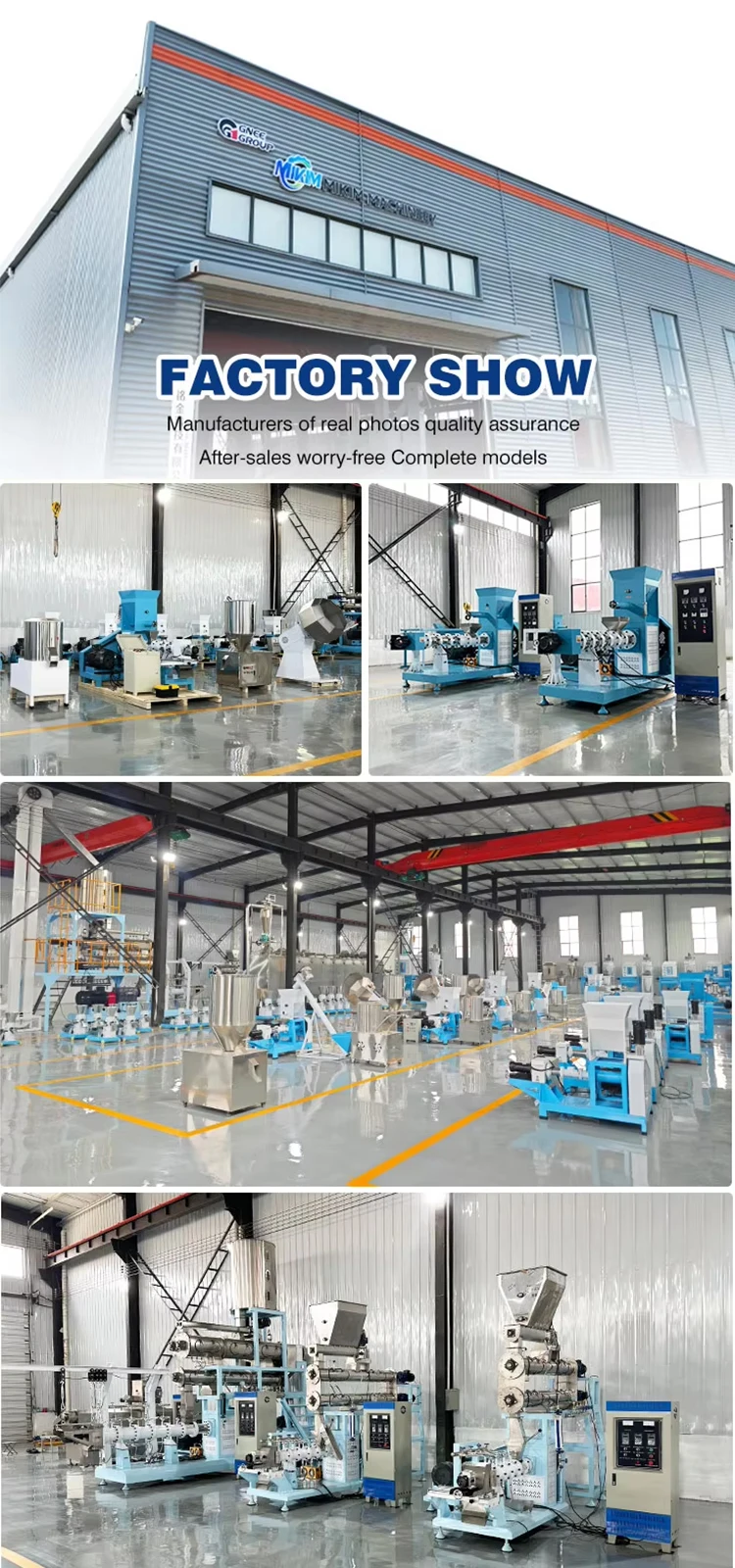
about Us
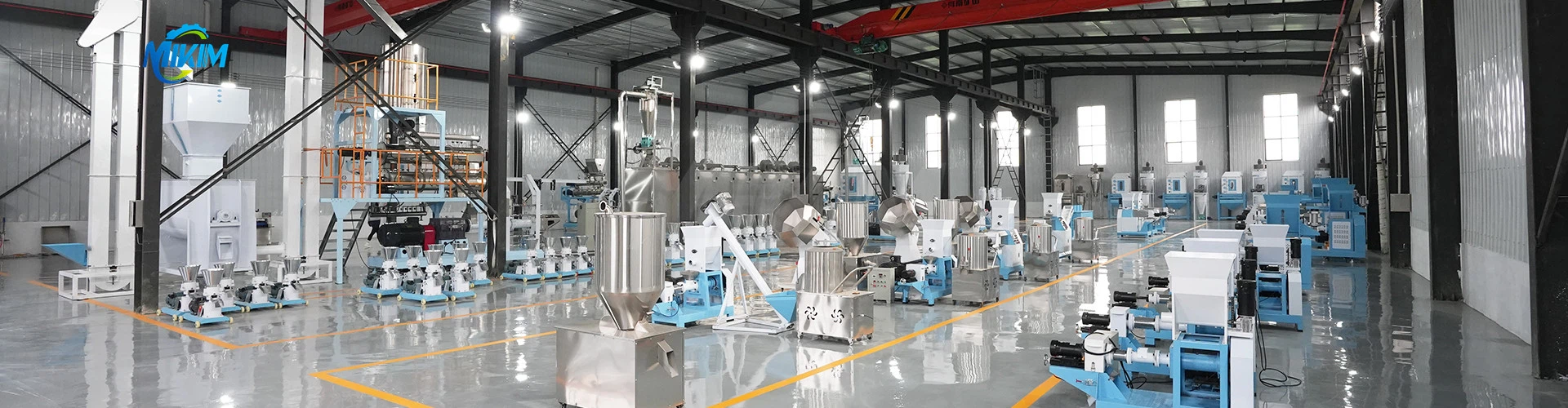
MIKIM's fish feed pellet production lines and supporting machinery offer excellent value for money. Not only are they affordable, eliminating middlemen markups and allowing small and medium-sized enterprises (SMEs) and fish farmers to purchase complete sets of equipment at reasonable costs, but they also boast exceptional efficiency.
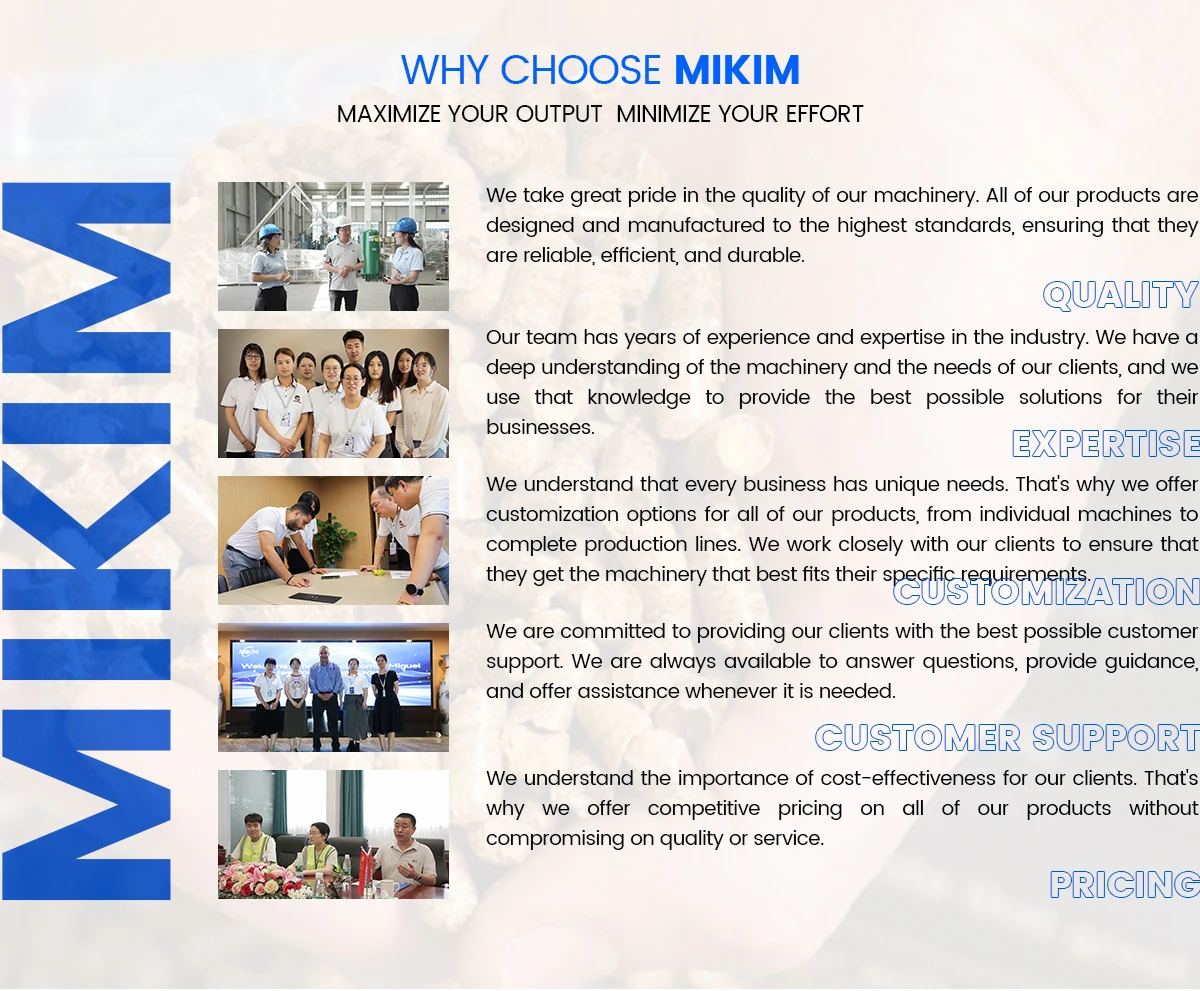
Choosing a MIKIM fish feed pellet production line means enjoying comprehensive pre-sales and after-sales service, including 24-hour online customer support, a one-year warranty on the entire machine, professional on-site installation, commissioning, and maintenance, and a stable supply of spare parts. Customers can buy with confidence and use with peace of mind, with both excellent value and service quality!!!