
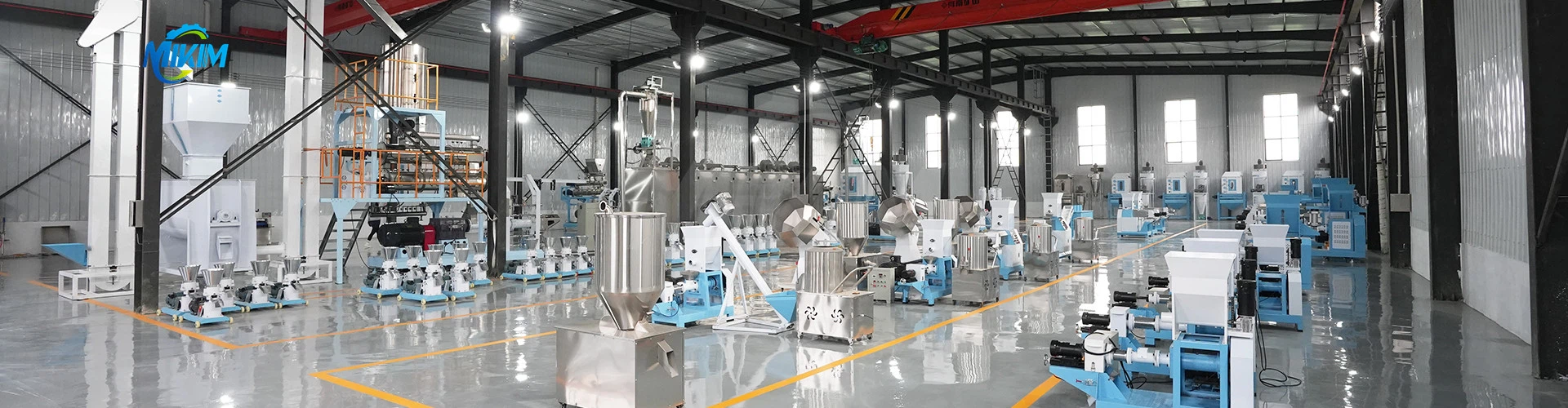
1. Production capacity and scale:
Determine the size of the farm and the daily feed needs, and choose equipment with appropriate production capacity to ensure that it can meet the breeding needs.
2. Equipment quality and durability:
Choose equipment from well-known manufacturers and pay attention to the quality and durability of the equipment. This can be evaluated by checking user reviews, manufacturer qualifications and product certifications.

| Model | Capacity | Power | Dimension | Weight |
| 125 | 80-100kg/h | 3kw | 110*35*70 cm | 95 kg |
| 150 | 120-150kg/h | 4kw | 115*35*80cm | 100 kg |
| 210 | 200-300kg/h | 7.5kw | 115*45*95cm | 300 kg |
| 260 | 500-600kg/h | 15kw | 138*46*100cm | 350 kg |
| 300 | 700-800kg/h | 22kw | 130*53*105cm | 600 kg |
| 360 | 900-1000kg/h | 22kw | 160*67*150cm | 800 kg |
| 400 | 1200-1500kg/h | 30kw | 160*68*145cm | 1200 kg |
3. Ease of operation and maintainability:
Make sure the equipment is easy to operate and the operator can easily get started. In addition, the maintainability of the equipment is also key. Easy-to-maintain equipment can help reduce downtime.
4. Production process flexibility:
Choose equipment with flexibility that can adapt to different types and specifications of feed production to cope with market changes.
5. Safety performance:
Ensure that the equipment meets relevant safety standards and is equipped with necessary safety protection devices to reduce the risk of accidents.