
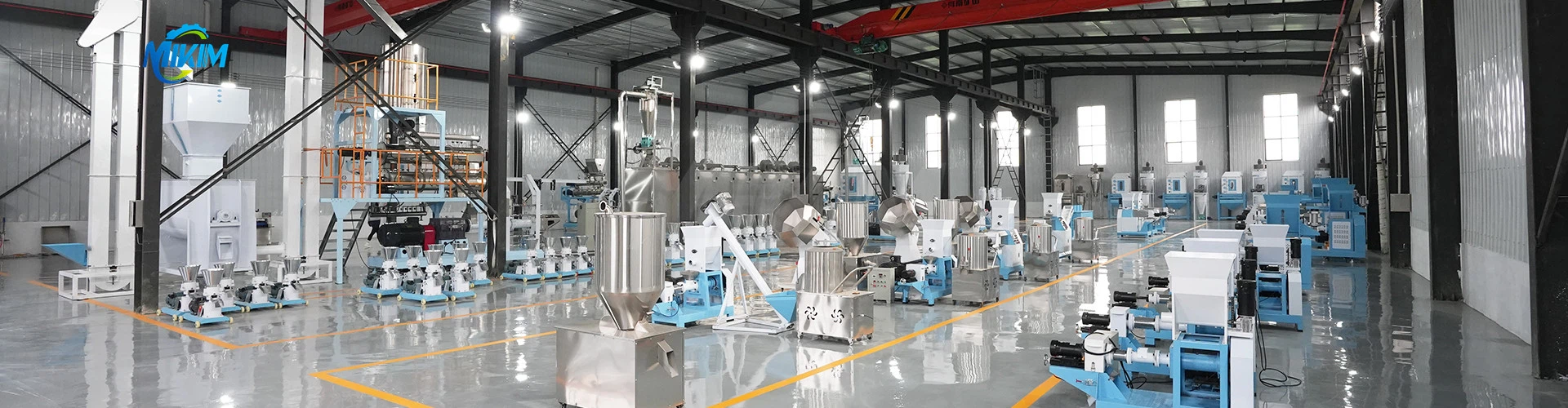
With the rapid expansion of animal husbandry, energy consumption and environmental pollution in the process of feed production have become increasingly serious. Therefore, the research and application of environmental protection technologies for energy conservation and emission reduction has become an important topic for the development of animal husbandry.
Energy consumption of feed production line
The feed production line is the core link of animal husbandry, and the energy consumption during its operation directly affects the production cost and environmental quality of animal husbandry. The main energy consumption of feed production line includes the following aspects:
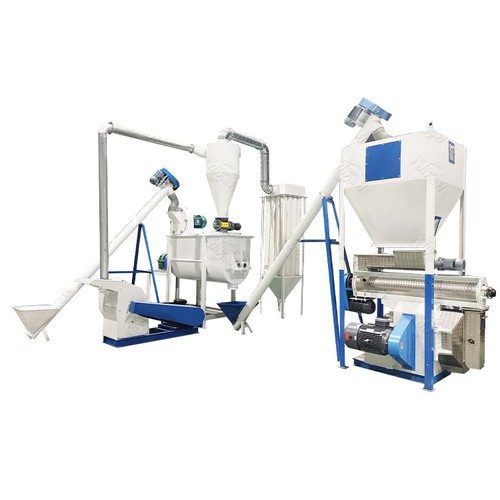
| Model | Capacity | Power | Dimension | Weight |
| 125 | 80-100kg/h | 3kw | 110*35*70 cm | 95 kg |
| 150 | 120-150kg/h | 4kw | 115*35*80cm | 100 kg |
| 210 | 200-300kg/h | 7.5kw | 115*45*95cm | 300 kg |
| 260 | 500-600kg/h | 15kw | 138*46*100cm | 350 kg |
| 300 | 700-800kg/h | 22kw | 130*53*105cm | 600 kg |
| 360 | 900-1000kg/h | 22kw | 160*67*150cm | 800 kg |
| 400 | 1200-1500kg/h | 30kw | 160*68*145cm | 1200 kg |
1. Energy consumption in the links of raw material crushing, mixing and drying;
2. Energy consumption of equipment such as grinders and granulators;
3. Power consumption of systems such as transportation and storage;
4. Electricity consumption for lighting, heating, etc. in the production process.
The energy consumption in these links not only leads to an increase in production costs, but also causes serious pollution to the environment. Therefore, how to reduce the energy consumption of feed production lines has become a top priority for the development of animal husbandry.