content
Common Fault 1: Feed pellets are loose and easily break apart, failing to form into pellets.
This is the most common fault in pet food extruder machines, with three main causes and simple, easy-to-implement solutions.
Causes: Improper raw material moisture (too high or too low), excessively low barrel temperature, and insufficient die pressure.
Solutions: Adjust raw material moisture to 16%-19%, increase barrel temperature by 5-10℃ to ensure sufficient starch gelatinization, adjust die pressure to 0.8-1.5MPa, and replace the die if the die orifice is excessively worn.


Common Fault 2: Feed pellets are burnt and have an off-odor.
Causes: Primarily excessively high barrel temperature, excessively long residence time of raw materials in the barrel, or die blockage.
Solutions: Immediately reduce the barrel temperature of the pet food processing machine to the standard range (120-160℃), appropriately increase the screw speed, and shorten the residence time of raw materials in the barrel; stop the machine and clean the burnt raw materials from the die and barrel; replace the heating element if damaged; feed at a uniform speed to avoid raw material accumulation.
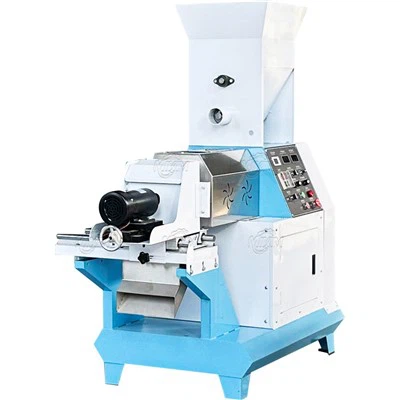
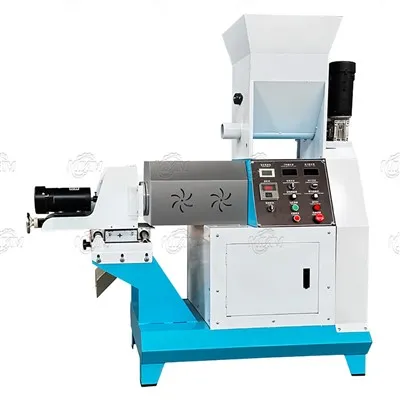
Common Fault 3: Pet food extrusion equipment malfunctions, jams, or makes abnormal noises.
Causes often include raw material blockage, screw wear, loose bolts, or impurities (such as metal shavings or pebbles) mixed in the raw material.
Solution: Immediately stop the machine and disconnect the power. Clean the feed inlet and remove any blocked raw material from the barrel, and screen to remove impurities. Check the screw for wear; if there are obvious scratches or dents, repair or replace it promptly. Tighten loose bolts and apply grease to the screw and bearings to ensure smooth operation.


Common Fault 4: Pet food extrusion machine fails to start or stops immediately after starting.
Causes are mainly power line faults, motor faults, or excessive equipment load.
Solution: First, check the power line and plug. If the line is damaged or the plug is loose, replace the line and tighten it again. If the motor makes abnormal noises or the temperature rises rapidly, it indicates worn motor bearings or aging coils, requiring immediate repair. If the equipment is overloaded, clean the raw material from the barrel, reduce the feed rate, and lower the load.
Finished Product Display

about Us
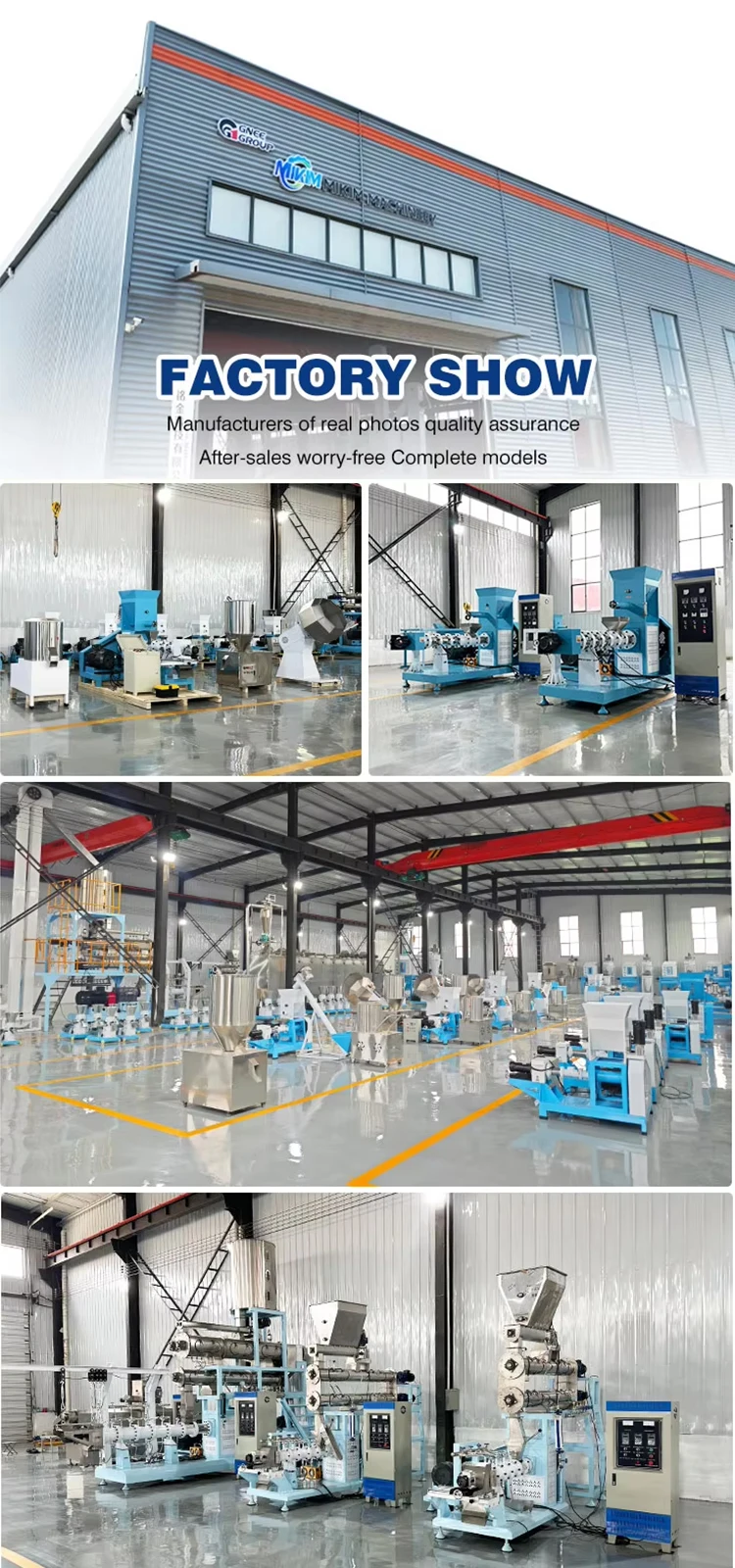
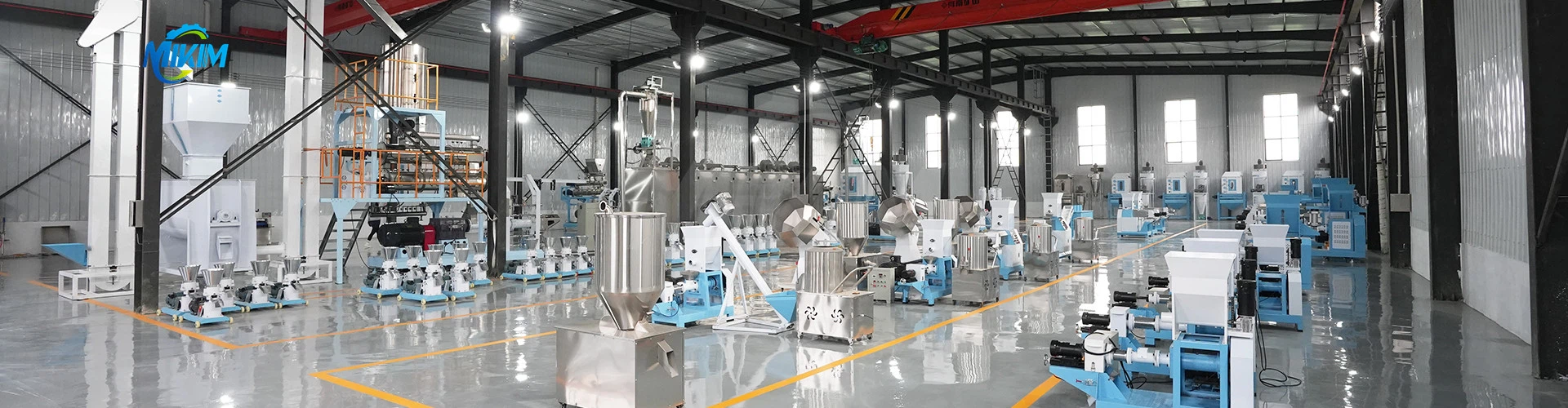
MIKIM's fish feed pellet production lines and supporting machinery offer excellent value for money. Not only are they affordable, eliminating middlemen markups and allowing small and medium-sized enterprises (SMEs) and fish farmers to purchase complete sets of equipment at reasonable costs, but they also boast exceptional efficiency.
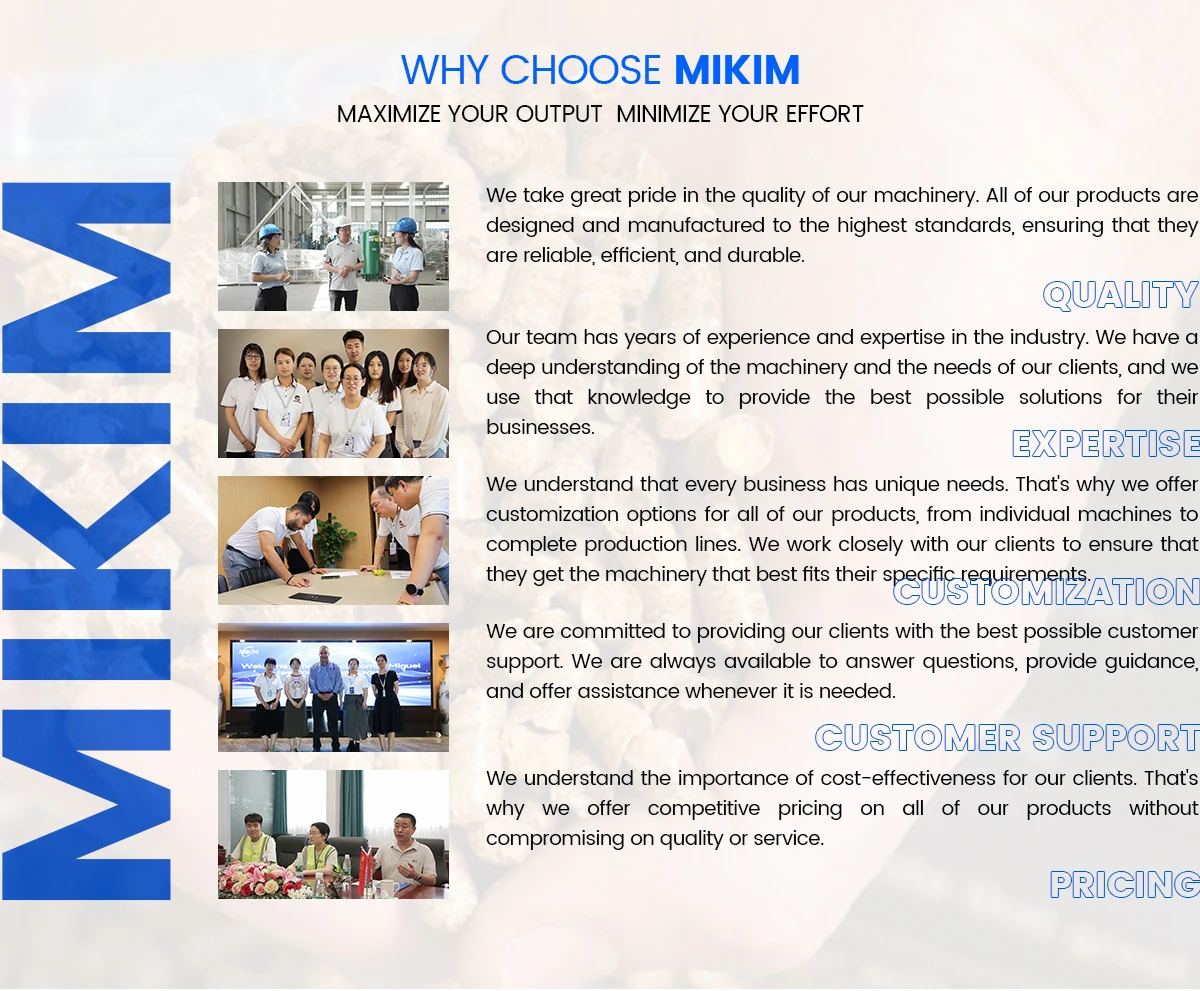
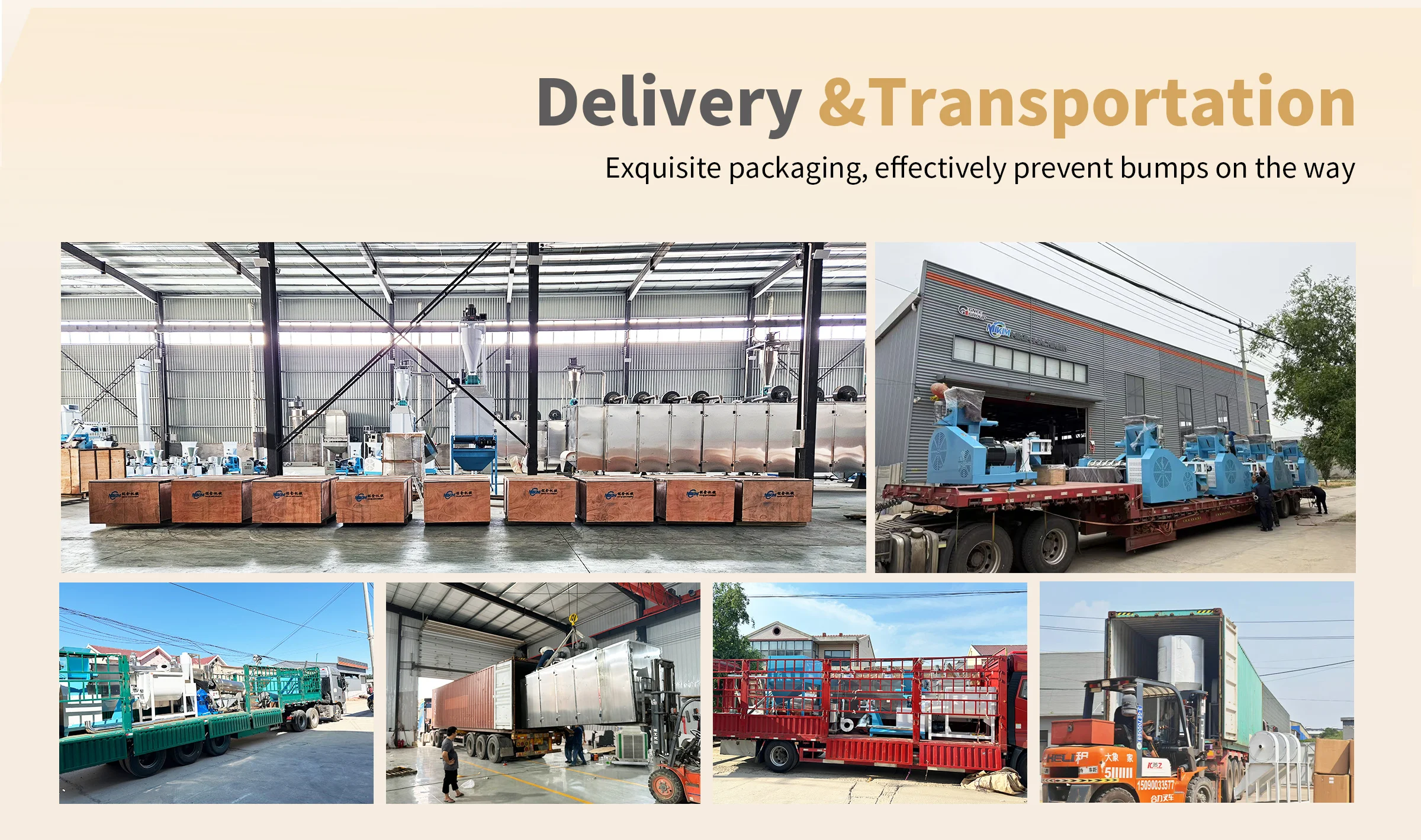
Choosing a MIKIM fish feed pellet production line means enjoying comprehensive pre-sales and after-sales service, including 24-hour online customer support, a one-year warranty on the entire machine, professional on-site installation, commissioning, and maintenance, and a stable supply of spare parts. Customers can buy with confidence and use with peace of mind, with both excellent value and service quality!!!