
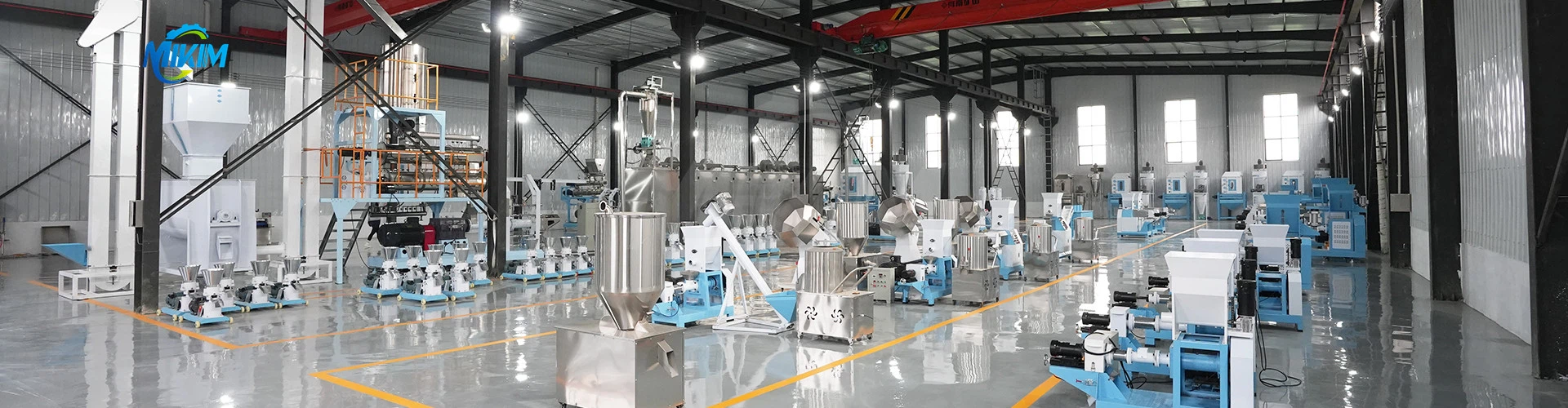
Complete feed equipment can achieve energy conservation and emission reduction, reduce energy consumption and environmental pollution. Complete feed equipment adopts advanced processing technology and equipment design, which can maximize the use of energy, recycle residual heat and reduce production costs.
Complete feed equipment can produce feed that meets the growth characteristics and nutritional needs of poultry and livestock according to their needs, so as to improve the production performance and growth rate of poultry and livestock, enhance the resistance and immunity of poultry and livestock, reduce the incidence of diseases, and improve breeding benefits.

| Model | Capacity | Power | Dimension | Weight |
| 125 | 80-100kg/h | 3kw | 110*35*70 cm | 95 kg |
| 150 | 120-150kg/h | 4kw | 115*35*80cm | 100 kg |
| 210 | 200-300kg/h | 7.5kw | 115*45*95cm | 300 kg |
| 260 | 500-600kg/h | 15kw | 138*46*100cm | 350 kg |
| 300 | 700-800kg/h | 22kw | 130*53*105cm | 600 kg |
| 360 | 900-1000kg/h | 22kw | 160*67*150cm | 800 kg |
| 400 | 1200-1500kg/h | 30kw | 160*68*145cm | 1200 kg |
Complete feed equipment can process feed raw materials, and mixing, crushing, granulation and other processes can improve the quality and safety of feed. Through strict production process and quality control, the nutritional balance of feed can be guaranteed, the use of additives and antibiotics can be reduced, the residue of harmful substances in feed can be avoided, and the safety of poultry and livestock food can be guaranteed.
Complete feed equipment can automate production, improve production efficiency, reduce labor costs, and at the same time, it can mass-produce high-quality and high-nutritional-value feed to meet the needs of different farms.
The automated production of complete feed equipment can reduce the labor intensity of workers, reduce the incidence of production accidents, and improve the hygiene and safety of the production environment.
In short, the application of complete sets of feed equipment can improve the production performance of poultry and livestock and the quality of feed, while reducing production costs, energy consumption and environmental pollution, and improving production efficiency and the hygiene and safety of the production environment.