
content
Scenario 1: Pond Aquaculture, Adaptable to Universal Multi-Size Feed
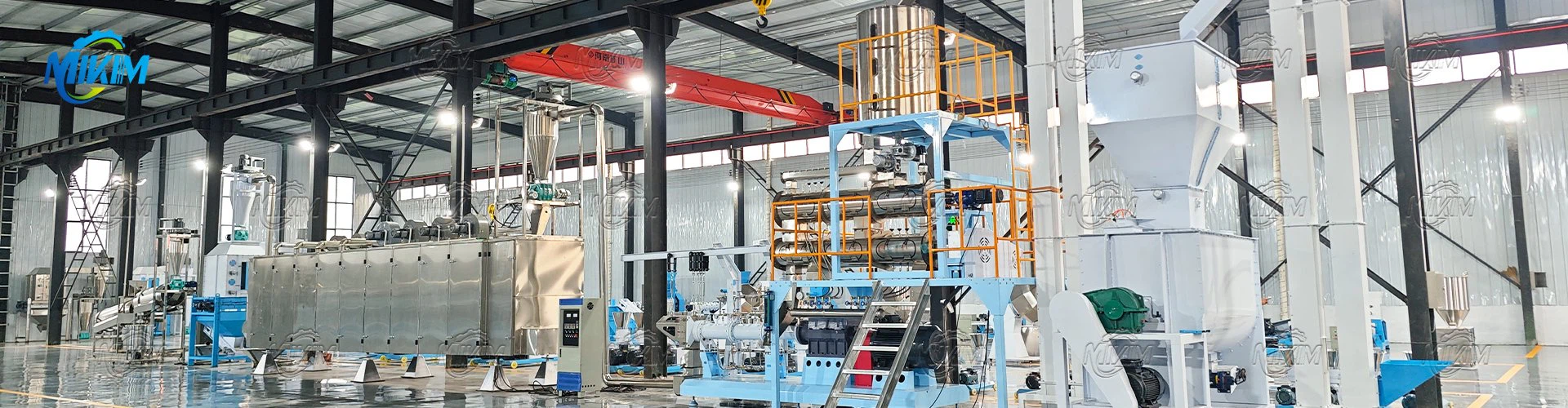
Pond aquaculture is the most common scenario, involving a complex variety of fish species (often polyculture, such as carp, grass carp, and silver carp). The Twin Screw Sinking Fish Feed Making Machine can produce universal multi-size feed, covering core specifications: particle size 2mm-8mm, and buoyancy types including floating (grass carp), sinking (carp), and semi-sinking (tilapia), which can be flexibly combined according to the polyculture ratio. During production, the twin-screw extruder can switch to batch production mode, adjusting the screw speed to 340-360 rpm to improve production efficiency, achieving an hourly output of 100-1000 kg, suitable for ponds of different sizes. Simultaneously, it can produce feed with strong water resistance (not disintegrating for 6-8 hours), avoiding feed waste caused by pond water flow, meeting the low-cost, large-scale requirements of pond aquaculture.


Scenario 2: Factory/Cage Aquaculture, Adapted to High-Precision Specialized Specifications
Factory and cage aquaculture place extremely high demands on the precision of fish feed specifications, requiring adaptation to the needs of high-density farming and precise feeding. The Twin Screw Floating Fish Feed Pellet Making Machine can produce high-precision specialized specifications: particle size error ≤ ±0.1mm, buoyancy rate ≥98%, water resistance ≥8 hours, suitable for high-end commercial fish species such as sea bass and salmon. During production, the twin-screw extruder needs to be in precise control mode, with temperature (140-150℃) and pressure (5-6MPa) sensors calibrated, and a variable frequency feeding system used to ensure particle uniformity. Simultaneously, it can produce high-protein, growth-promoting functional specifications, which, when combined with automatic feeding equipment, reduce manual intervention and improve aquaculture efficiency. Furthermore, for cage aquaculture, specifications with enhanced waterproofing can be customized to prevent pellet disintegration caused by seawater immersion.

Scenario 3: Ornamental Fish Farming, Adapted to Refined and Irregularly Shaped Feeds
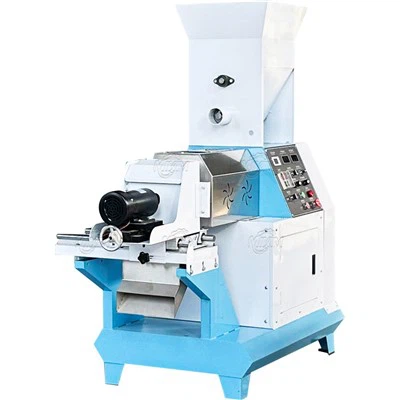
Ornamental fish farming demands highly refined and aesthetically pleasing fish feed sizes. The Twin Screw Floating Fish Feed Pellet Extruder can produce refined and irregularly shaped feeds. Core sizes include: 0.8mm-2mm (suitable for small ornamental fish) and 3mm-5mm (suitable for medium-sized ornamental fish). Shapes can be customized into round, strip, and granular forms. Floating is the primary buoyancy (facilitating observation of feeding). It can also produce functional feeds with color-enhancing and vibrancy-enhancing properties (added with spirulina and astaxanthin). During production, the twin-screw extruder needs to be fitted with a special irregularly shaped die head, reducing the screw speed (300-320r/min) and increasing the temperature (120-130℃) to ensure fine particles and uniform shapes. Simultaneously, low-temperature curing technology is used to preserve the activity of color-enhancing components, resulting in more vibrant colors in the ornamental fish. This meets the refined needs of ornamental fish farming and aligns with the EEAT algorithm's requirements for practicality and timeliness.
about Us
Customer visit

Certificate of Honor

FAQ
1. What is the price of the dog food manufacturing equipment?
The price ranges from approximately $1,500-$55,000
2. Do you provide maintenance services for your customers?
Yes, we offer comprehensive after-sales maintenance services to our customers.
If you would like to learn more about MIKIM machinery, please contact us. We offer one-stop service and welcome your inquiries!!!