
content
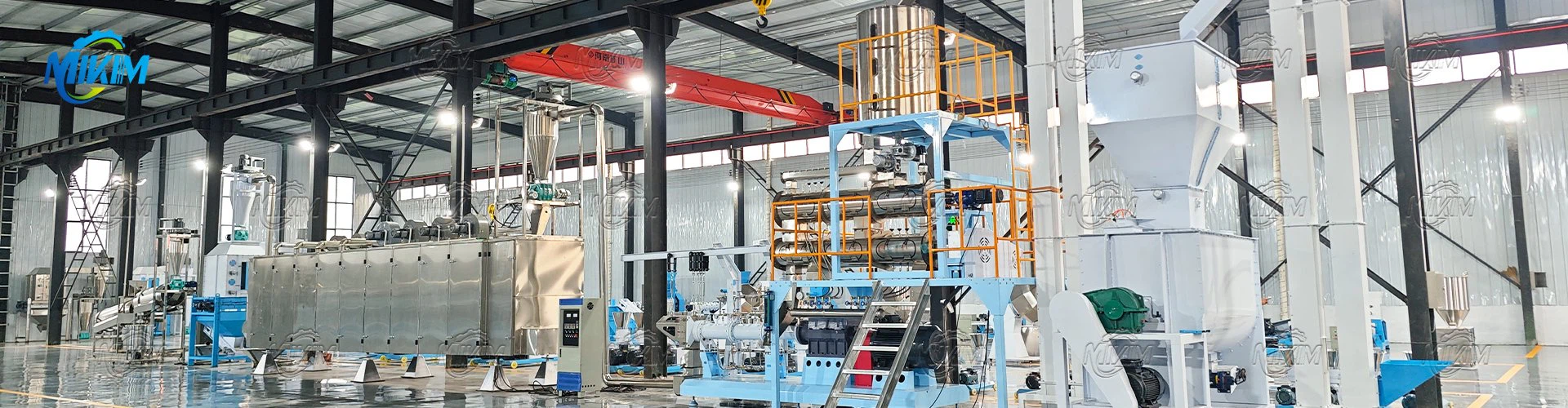
The extrusion system is the core component, requiring close attention to the screw type and the precision of temperature and pressure control. Compared to single-screw extrusion systems, small pet food extrusion equipment machines offer advantages such as more uniform raw material mixing, more stable extrusion results, and a wider range of compatible raw materials, making them suitable for scenarios with high feed quality requirements (e.g., high-end cat food, specialty fish feed), but they are more expensive. Single-screw extrusion systems offer better cost-effectiveness and are suitable for basic feed production. Regardless of the type chosen, it is crucial to ensure temperature control accuracy within ±5℃ and pressure fluctuations not exceeding 0.5MPa; otherwise, uneven feed maturation and unstable buoyancy will occur. For example, when producing floating dog food, insufficient temperature control accuracy can lead to some pellets becoming over-gelatinized and scorched, while others remain under-expanded and sink. Simultaneously, the screw and extrusion chamber should be made of wear-resistant materials (such as 38CrMoAl alloy), which have a service life of 1500-2000 hours, significantly reducing maintenance costs.
The power matching and stability of the power system are critical, directly affecting the dog food pellet machine's production capacity and extrusion effect. Power selection should be based on production capacity requirements: 1-5 kg/h capacity is suitable for 2.2-5.5 kW motors, 5-20 kg/h for 7.5-15 kW motors, and above 20 kg/h for motors above 15 kW. It is recommended to choose brand-name motors (such as national standard copper wire motors), as they offer stable speed, low energy consumption, and low failure rate, avoiding production interruptions due to motor malfunctions. Simultaneously, it is necessary to confirm whether the equipment is equipped with variable frequency speed control (VFD) functionality. A VFD system can precisely adjust the screw speed (300-400 r/min) to adapt to the extrusion requirements of different raw materials and feed types, improving equipment flexibility. For example, when processing fine-particle juvenile fish feed, the speed can be reduced via VFD to ensure uniform pellet formation.
The ease of use and intelligence of the control system affect operational difficulty and production efficiency. For novice users or home feeding scenarios, prioritize small dog food pellet machines with preset parameter functions. These machines allow direct selection of preset modes such as "kitten food" and "grass carp food," eliminating the need for manual adjustments. For medium-sized and larger operations, it is recommended to choose a control system with a touchscreen and data logging capabilities. This system can monitor temperature, pressure, and production capacity in real time, facilitating parameter optimization and production management. Additionally, the equipment should be equipped with overload protection and fault alarm functions. In case of issues such as raw material blockage or motor overload, the machine should automatically shut down and alarm, protecting both the equipment and the safety of operators.
Related equipment


about Us
Customer visit

Certificate of Honor

FAQ
1. What is the price of the best dog food pellet machine?
The price ranges from approximately $1,500-$55,000
2. Do you provide maintenance services for your customers?
Yes, we offer comprehensive after-sales maintenance services to our customers.
If you would like to learn more about MIKIM machinery, please contact us. We offer one-stop service and welcome your inquiries!!!