
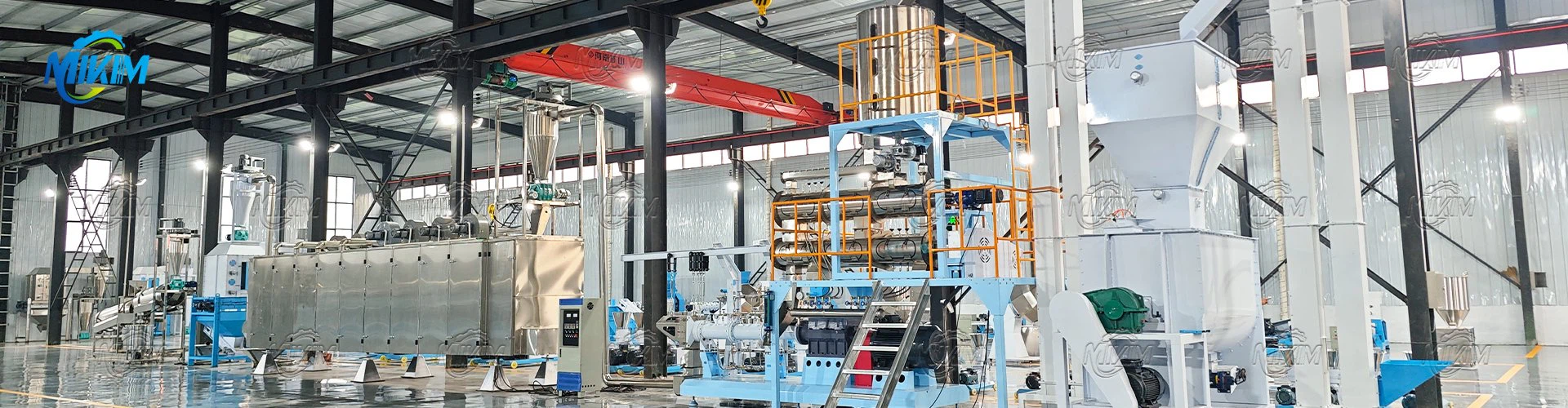
Feed production line
Traditional mechanical equipment relies heavily on manual operation and empirical judgment, resulting in limited efficiency and difficulty ensuring product stability. However, the trend toward intelligent manufacturing is gradually overcoming these limitations, bringing about positive changes in the feed processing industry in terms of quality control, production efficiency, and energy utilization.
In feed pellet production lines, automated systems can collect real-time data on various parameters during the production process, such as temperature, humidity, pressure, and flow rate, and dynamically adjust them through data analysis to ensure consistent product quality. For example, intelligent temperature control systems can automatically adjust heating and cooling parameters based on different recipes, reducing human error and improving production consistency.
The application of IoT technology has introduced interconnectivity to feed processing machinery. By connecting sensors, controllers, and cloud platforms, remote monitoring is possible, along with automatic alarms and remote adjustments when anomalies occur. This connectivity significantly improves equipment efficiency and eases maintenance. Real-time monitoring of equipment status can provide early warning of potential failures, minimize unplanned downtime, and thus lower production costs.
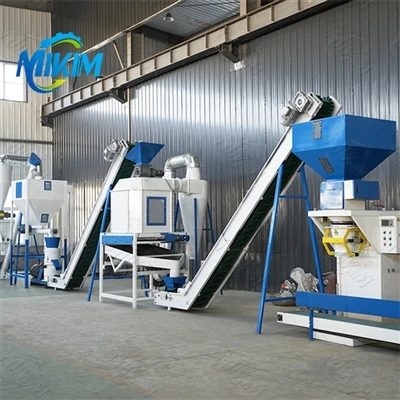
| Capacity | 15-20t/h |
| Range of application | large commerical feed factory,could make chicken,sheep,cow,shrimp feed |
| Workers requirments | 4-5 people |
| Shipment requirments | 6*40ft container |
| Product advantages | Fully automatic intelligent batching, computer control system with stable output, efficient and continuous operation, labor saving, direct packaging, particle size can be selected from 1-12mm. |
| size for whole line | According to land size and layout |
Key points of process analysis
1. Raw material pretreatment: Remove impurities, crush, and mix to improve efficiency.
2. Ingredients: Add ingredients according to the appropriate proportions, controlling the mixing order and uniformity of powder, granules, and water.
3. Mixing: Optimize mixing time to ensure uniformity.
4. Packaging: Sealed to prevent moisture, maintain hygiene, and extend shelf life.
Selecting efficient and safe equipment and optimizing processes can improve feed quality and production efficiency, while reducing waste. Regular maintenance and standardized operations are essential to ensure safe production.


Hammer Mill
Feed grinder is a special equipment used to process crop straw, grain, soybean meal and other raw materials into powdered feed. It belongs to the category of crushing machinery and is mainly used in feed processing, biomass energy and straw comprehensive utilization.

Screw Conveyor
Used for conveying grain and powdery raw materials, sealed structure, reliable, clean, hygienic, no residue.

Stainless Steel Mixer
Stainless steel mixer is suitable for mixing powdered raw materials, with high efficiency and fast mixing speed, suitable for small-scale feed.

Feed Pellet Machine
Feed pellet machines are widely used in large, medium and small livestock and poultry farming. They can produce feed pellets of various specifications with simple structure, wide adaptability, small footprint and low noise.

cooler
Feed cooler is a cooling equipment that adopts the countercurrent cooling principle. The particles are cooled fully and evenly. It runs smoothly and discharges smoothly.

packer
The device mainly consists of three parts: automatic weighing and packaging machine, conveying device and sewing device. It is mainly suitable for quantitative packaging of granular and granular powder mixed materials.
FAQ
Q: What size pellets are needed?
A: Animals need different pellet feed diameters at different growth stages. We have 1-12mm molds for you to choose from, and of course we can customize them according to your needs.
Q: Is MIKIM Machinery a manufacturer?
A: Yes, we are a feed mill equipment manufacturer. We are a factory, not a middleman or a trading company. All equipment prices are ex-factory prices.
Q: What is the price?
A: The price of the production line is affected by many factors, including but not limited to equipment transportation costs, related taxes, market supply and demand, equipment performance and quality, materials and processes, and the degree of automation of the production line. However, we can build the most suitable production line for you according to your budget and actual needs.
If you want to know more about process design, equipment layout, plant construction plan, single-machine equipment quotation, turnkey quotation and other information, please feel free to contact us.
Real shots of the production workshop


Certificate of Honor
