
content
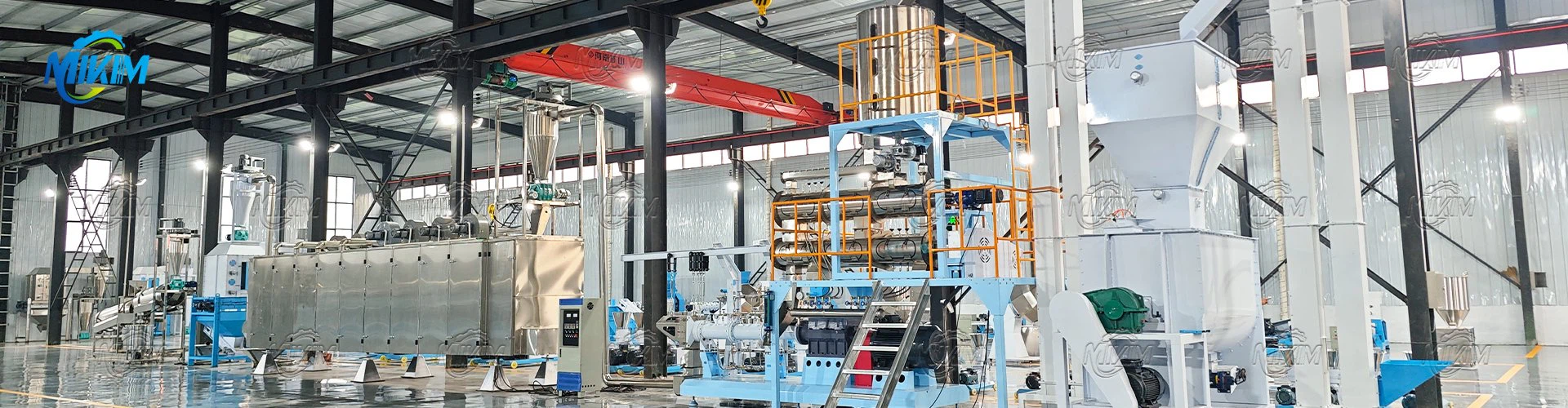
Analysis of the core causes of poor buoyancy in pet food extruders. The buoyancy of buoyant feed depends on the porous structure formed under the high temperature and pressure of the extruder. If the temperature of the pet food extruder is insufficient (below 120℃), starch gelatinization is incomplete (gelatinization degree <75%), failing to form a stable network support structure. This results in fewer internal pores and higher density in the pellets, making them prone to rapid sinking. Imbalanced pressure control (below 3MPa) leads to insufficient water vapor expansion during extrusion, resulting in insufficient porosity and decreased buoyancy. Excessive screw speed (above 400r/min) causes insufficient residence time of the raw material in the extrusion chamber, resulting in incomplete extrusion and a pellet buoyancy rate potentially below 80%, far below the industry standard (≥95%). Furthermore, excessively low starch content (<30%) and excessively high moisture content (>14%) in the raw material also affect the extrusion effect of the extruder, indirectly leading to poor buoyancy.
Targeted solutions. Regarding parameter control, the temperature of the Dog Food Extruder machine needs to be increased to 130-160℃, and the pressure stabilized at 4-6MPa. The screw speed should be adjusted according to the raw material characteristics (250-350 r/min) to extend the raw material residence time, ensuring sufficient starch gelatinization and moisture expansion. The raw material ratio should be optimized, increasing the proportion of starchy raw materials such as corn and wheat flour to 35%-50% to provide support for extrusion molding. Simultaneously, the moisture content of the raw materials should be strictly controlled at 12%-14% to avoid excessive moisture causing adhesion or insufficient frictional heat generation. For equipment inspection, regularly clean the die head of the mini fish feed machine to remove residual burnt material, preventing pore blockage or wear, ensuring a smooth pressure drop during extrusion, and guaranteeing uniform pore formation.
Prevention and Daily Management Points Preheat the dry dog food making machine to the set temperature before each startup to avoid low-temperature feeding; monitor the buoyancy rate in real time during production, sampling and testing every 30 minutes, and fine-tune parameters promptly if the buoyancy decreases; regularly calibrate the temperature and pressure sensors of the extruder to ensure accurate parameter display and avoid improper control due to sensor errors. Meanwhile, the raw materials must be crushed to 80-100 mesh to ensure uniform particle size, laying the foundation for efficient operation of the extruder.
Related equipment


about Us
Customer visit

Certificate of Honor

FAQ
1. What is the price of the mini floating fish feed machine?
The price ranges from approximately $1,500-$55,000
2. Do you provide maintenance services for your customers?
Yes, we offer comprehensive after-sales maintenance services to our customers.
If you would like to learn more about MIKIM machinery, please contact us. We offer one-stop service and welcome your inquiries!!!