
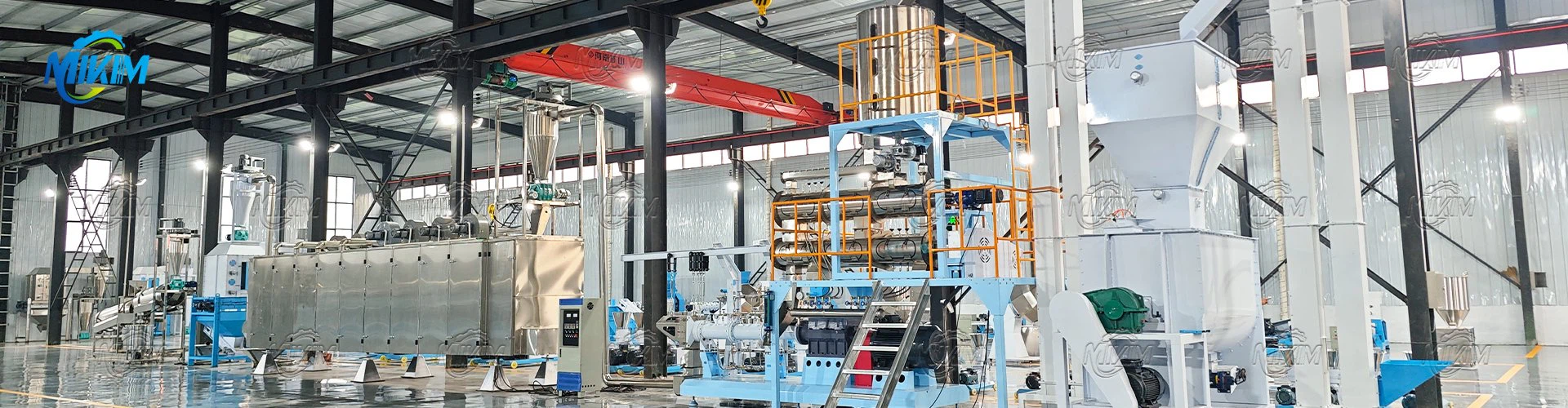
Pet feed extruder machines can produce various product forms by changing the die head, which is their most obvious advantage: versatility. The die head's aperture and shape determine the size and appearance of the feed pellets. By changing different dies, the extruder can produce cylindrical pellets of 2-10mm (suitable for adult dogs), fine pellets smaller than 2mm (suitable for puppies and cats), bone-shaped or spherical treat pellets, and even special forms of pet food such as flakes and strips. One small pet food factory, by equipping itself with five different dies, developed more than ten products using only one extruder, covering different growth stages and feeding scenarios for pets, increasing the product variety threefold compared to using traditional equipment.
content
In terms of formula adaptability, small pet food making machines have an irreplaceable advantage, meeting the production needs of different functional feeds. When producing high-protein dog food, the temperature (120-130℃) and pressure (4-6MPa) of the extruder can be adjusted to ensure sufficient denaturation of the protein in the meat meal. When producing grain-free food, the screw speed and feeding rate can be optimized to avoid grain residue. When producing low-fat dog food, the extrusion temperature and drying time can be controlled to reduce fat content. Furthermore, the extruder can be adapted to the addition of various functional ingredients such as fruit and vegetable powders, probiotics, and fish oil to produce specialty products such as coat-enhancing food, gut-friendly food, and weight-loss food, meeting the individual needs of pets.
The ability to diversify texture and flavor is also a core advantage of small pet food processing machines. By changing the temperature and pressure of the extruder, feed with different textures can be produced: pellets produced under high temperature and high pressure (150℃, 8MPa) are crispier, suitable for adult dogs' teeth grinding; pellets produced under medium temperature and low pressure (120℃, 3MPa) are softer, suitable for puppies and senior dogs. Meanwhile, the puffed granules have a porous structure, which allows for better absorption of flavor substances such as oils, meat juices, and flavorings. By adjusting the flavor components sprayed on, products with various flavors such as chicken, beef, and fish can be produced, solving the problem of picky eaters in pets.
Product diversity directly enhances market competitiveness. Manufacturers using pet food processing machines can quickly develop new products based on market trends. For example, when the pet snack market booms, they can quickly launch puffed jerky and vegetable sticks; when the demand for functional feed increases, they can develop probiotic-containing gut-care food. This ability to respond quickly to the market gives companies an advantage in fierce competition. For producers, the puffing machine is not only production equipment but also a "booster" for product innovation, helping to expand into broader market spaces.
Related equipment



about Us
Customer visit

Certificate of Honor

FAQ
1. What is the price of the dog food pellet maker?
The price ranges from approximately $1,500-$55,000
2. Do you provide maintenance services for your customers?
Yes, we offer comprehensive after-sales maintenance services to our customers.
If you would like to learn more about MIKIM machinery, please contact us. We offer one-stop service and welcome your inquiries!!!