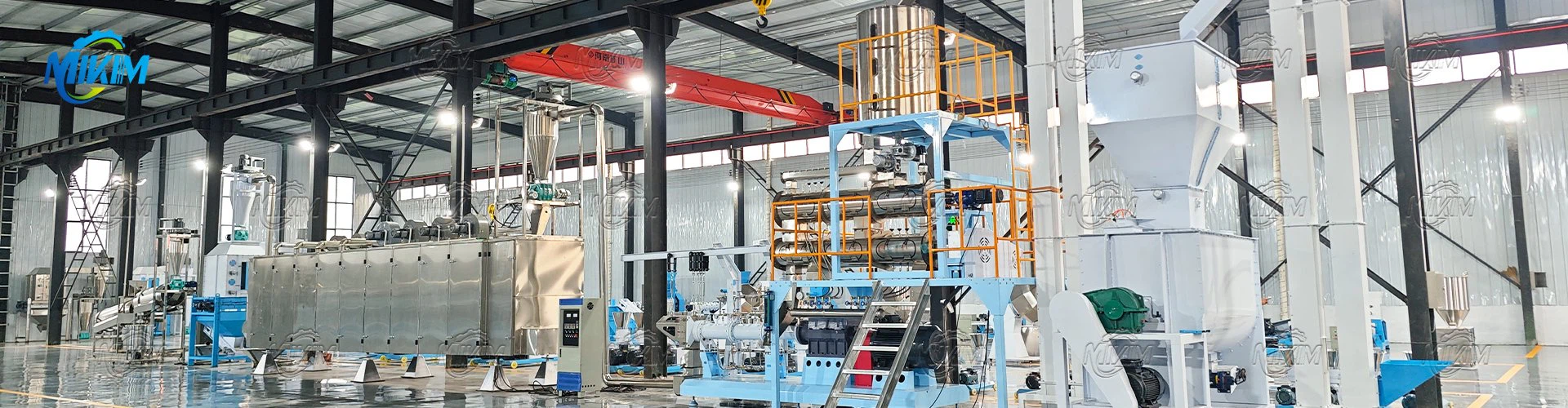
The inconsistent extrusion quality of floating fish feed pellet extruder machines (significant differences in extrusion rate, shaping, and appearance between batches) leads to inconsistent product quality, damaging brand reputation and increasing rework and scrap costs.
Details
I. Specific Phenomena of Unstable Extrusion Quality
Phenomenon Description:
- Variation in Extrusion Rate: Significant differences in extrusion rate (more than 10%) between batches. Some batches may be under-expanded, while others are over-expanded.
- Shaping Issues: The quality of shaping is inconsistent, with some batches producing regular, intact particles, while others result in irregular shapes or broken pieces.
- Appearance Fluctuations: Batches vary in appearance quality. Some may be defect-free, while others exhibit burnt spots, color differences, or burrs.
- Taste and Density Variability: Taste, texture, and density show significant differences between batches, undermining the standardization and quality requirements of the product.
II. Core Causes of Unstable Puffing Quality
1. Excessive Batch Variation in Raw Materials (50%)
- Raw Material Differences: Variations in moisture content, particle size, starch/protein content, and especially the ratio of amylose to amylopectin in starchy raw materials lead to significant puffing differences. Additionally, inconsistent storage conditions (humidity, temperature) may affect raw material properties, such as moisture absorption, mold growth, or fatty acid oxidation.
- Impact on Puffing: When the raw material characteristics vary from batch to batch, the puffing process becomes inconsistent. Without prompt adjustments to process parameters after raw material changes, puffing quality fluctuates drastically.
2. floating fish feed pellet making machine Parameter Fluctuations (30%)
- Steam Pressure & Flow Instability: Fluctuations in steam pressure and flow rates lead to temperature and pressure instabilities inside the machine chamber, disrupting the puffing process.
- Mismatched Equipment Speeds: Discrepancies in feeding speed, screw speed, and temperature parameters can affect material gelatinization and puffing, causing batch-to-batch inconsistency.
- Uncalibrated Instruments: Delayed calibration of temperature controllers, pressure sensors, or other monitoring instruments results in erroneous readings, leading to incorrect parameter adjustments and affecting puffing consistency.
3. Inadequate Maintenance of Floating Fish Food Production Machine (15%)
- Wear of Key Components: Uneven wear on parts like screws, screw sleeves, and dies leads to equipment performance fluctuations. This causes inconsistent material extrusion, varying puffing quality, and more frequent production defects.
- Lubrication and Cooling System Issues: Malfunctions in lubrication or cooling systems can cause fluctuations in screw speed, bore temperature, and extrusion pressure, affecting the puffing process.
- Residual Material Build-up: Improper cleaning after each batch can cause residual materials to mix with new batches, leading to contamination, inconsistent puffing effects, and defects in appearance and texture.
4. Non-Standard Operation and Process Control (5%)
- Inconsistent Operating Practices: Changes in operators or failure to follow standardized procedures during production can lead to variations in process control. Inconsistent parameter adjustments also contribute to batch-to-batch variation.
- Lack of Production Records: Without detailed batch production records, it is difficult to track and troubleshoot quality issues, making it harder to optimize parameters for future batches.
III. Solutions to Unstable Puffing Quality and Standardized Control
1. Raw Material Standardization Management
- Raw Material Testing: Implement a raw material testing system before each batch, checking moisture content, particle size, and starch/protein content to ensure compliance with production standards.
- Standardized Storage Environment: Maintain a dry, well-ventilated storage environment to prevent raw materials from absorbing moisture or becoming moldy.
- Batch Adjustment: After a change in raw material, conduct a small-batch trial run to adjust process parameters before full-scale production, ensuring consistency.
2. floating fish feed making machine Parameter Stability Control
- Pressure Stabilization: Install pressure stabilizing equipment to maintain consistent steam pressure and flow rates, ensuring stable puffing results.
- Automated Control System: Implement an automated system to control feeding speed, screw speed, and milling temperature, reducing human error and ensuring process consistency.
- Regular Calibration: Ensure that temperature controllers, pressure sensors, and other monitoring instruments are calibrated regularly, with errors controlled within a ±5°C range.
3. Routine floating fish feed pellet maker machine Maintenance
- Daily Inspection and Periodic Maintenance: Establish a daily inspection routine for vulnerable parts (screws, sleeves, dies), and schedule in-depth quarterly maintenance to replace worn parts promptly.
- Post-Production Cleaning: After each production run, thoroughly clean the equipment, including dies, manifolds, and screws, to prevent cross-contamination between batches.
- Lubrication and Cooling System Check: Regularly check the lubrication and cooling systems to ensure they operate optimally and provide stable performance during production.
4. Standardized Operation and Record Management
- Operator Training: Provide professional training to operators to ensure standardized operating methods are followed, reducing the likelihood of human error.
- Batch Production Records: Maintain detailed batch records that include raw material parameters, process parameters, and equipment status for each batch. This makes it easier to trace issues and optimize parameters.
- Data Analysis and Process Optimization: Regularly analyze batch quality data to identify patterns and optimize production parameters for more consistent quality.
Company Profile