

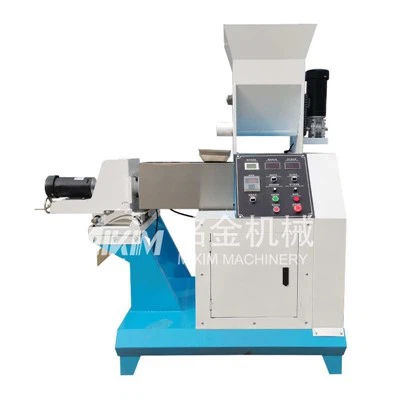
First, clarify the core principle: when using a fish feed pellet processing machine to produce animal feed, the selection of the machine must be "precisely matched to the type of livestock and the feed formulation."
content
Common Misconception 1: Inadequate Raw Material Particle Size. Many beginners directly feed large pieces of raw materials (such as whole corn kernels or uncrushed straw) into the fish feed pellet processing machine, resulting in loose, easily broken pellets and excessive equipment load. Solution: Raw materials should be crushed to 60-80 mesh, and coarse fibrous materials (such as straw) to 2-3mm. If making feed for young animals, the particle size needs to be increased to 80-100 mesh, and an extruder should be used to mature the core raw materials to improve digestibility. Simultaneously, the raw materials should be filtered through a vibrating screen to remove impurities and prevent metal or stones from damaging the pellet mill rollers and molds.
Common Misconception 2: Improper Raw Material Moisture Control. Excessive moisture (above 18%) will cause the raw materials to clump together inside the pet food pellet machine, clogging the molds and even burning out the motor; insufficient moisture (below 10%) will make pelleting difficult and result in loose pellets. Solutions: 1. Use a moisture meter to test the moisture content of raw materials. Control the moisture content of concentrated feeds such as corn and soybean meal at 12%-15%, and for coarse fiber raw materials such as straw and green fodder at 15%-18%. If the moisture content is too high, dry at a low temperature; if it is too low, spray with warm water to adjust. If using an extruder, cool the cooked raw materials to room temperature before feeding them into the pellet mill to prevent moisture evaporation at high temperatures from affecting pelleting.
Common Misconception 3: Inappropriate parameter settings for the fish feed pellet mill extruder. Adjust the pellet diameter and extrusion pressure according to the animal species and growth stage. For example, use 2-3mm pellets and low-pressure extrusion for chick feed, and 4-6mm pellets and high-pressure extrusion for fattening pig feed. Inappropriate parameter settings will result in unsuitable pellet hardness, affecting animal feed intake. Solution: Adjust parameters during small-batch trial production and record the pellet state under different parameters. If the pellets are too hard, reduce the extrusion pressure and increase the die diameter; if they are too soft, increase the pressure and decrease the die diameter.
Common Misconception 4: Neglecting the maintenance of fish feed production equipment. Failure to replace worn rollers and dies in a timely manner leads to a decrease in pellet formation rate; lack of regular equipment lubrication exacerbates component wear. Solutions: Check roller and die wear weekly; replace or repair rollers and dies with wear exceeding 0.5mm; add grease to bearings and transmission systems every 3 days; clean residual raw materials from the equipment after each use to prevent mold growth. If using a fish feed pellet mill extruder, clean and lubricate the extruder screw and die simultaneously to ensure stable equipment operation.
Common Misconception 5: Blindly pursuing "pure pellet mill production." For young animals and aquatic animals with high feed quality requirements, feed produced solely by a pellet mill has low digestibility and can easily cause gastrointestinal discomfort. Solution: Adopt a combined "extrusion + pelleting" process. First, mature the core raw materials using a small fish feed pellet extruder before feeding them into the pellet mill, balancing quality and cost. Avoiding these misconceptions is crucial for consistently producing high-quality animal feed using a pellet mill, leveraging the cost and quality advantages of self-made feed.
Related equipment


about Us
Customer visit

Certificate of Honor

FAQ
1. What is the price of the Fish Feed Extrusion Process?
The price ranges from approximately $1,500-$55,000
2. Do you provide maintenance services for your customers?
Yes, we offer comprehensive after-sales maintenance services to our customers.
If you would like to learn more about MIKIM machinery, please contact us. We offer one-stop service and welcome your inquiries!!!