
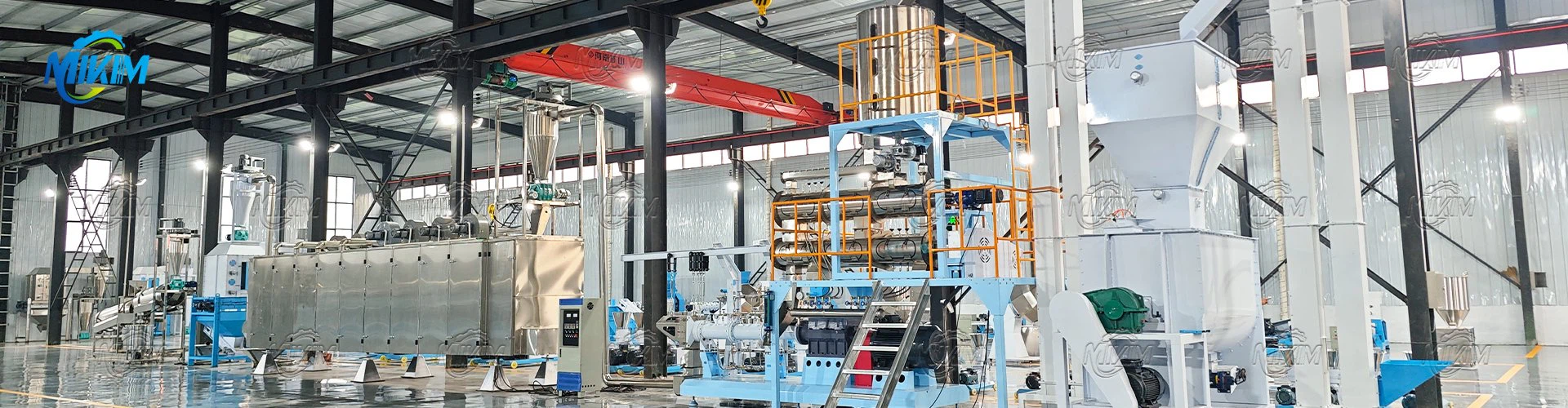
Equipment Installation
Installation sets the foundation for everything that follows. Follow the equipment manual for the assembly sequence, and ensure that all components are installed firmly and flat on a level foundation. Check the joints between the equipment sections for good sealing to prevent feed leakage, which wastes material and attracts pests. Confirm that the electrical connections follow the wiring diagram, that the safety guards are in place, and that the conveyor alignment is correct before any power is applied.
Equipment Commissioning
After installation, commission the line stage by stage. First, check the electrical systems of each component, including motors and control equipment, and confirm the motor rotation directions are correct. Second, check the transmission systems for stability and smooth operation. Finally, debug the control system so the line can operate automatically according to the set parameters. Run each machine separately before running the full line, and correct any abnormal noise or vibration before production starts.
Raw Material Preparation
Feed quality is decided by raw material quality. Prepare the required ingredients, such as grass meal, corn meal and soybean meal, ensuring freshness and consistent quality. Store materials under cover to prevent moisture pickup and mold, and check deliveries against the specification. The moisture and particle size of the raw materials must be within the range the line is designed for, because these two parameters have the largest effect on pellet quality.
Daily Operation
Operate the line according to the manual. Turn on the main power, then start each part of the equipment in the required sequence. During operation, watch the machine status: abnormal noises, vibrations and temperature changes are early warnings, and the line should be stopped promptly for inspection when they appear. Feed the line at the rated rate and keep the process parameters, such as mixing time and pelleting conditions, within the documented range.
Production Parameter Adjustment
Adjust the production parameters according to the actual situation to meet the feed needs of cattle and sheep of different breeds and stages. The production speed and output can be controlled by adjusting the equipment speed and feed amount. When changing formulas, adjust the settings for the new material and run trial batches before full production, recording the successful parameter set for each formula so it can be reproduced.
Records and Continuous Improvement
Keep production records: raw material consumption, production speed, output, quality results and fault handling. These data are the basis for analyzing equipment performance and optimizing the process. Review the records regularly to find recurring problems, adjust the maintenance schedule, and improve the operating procedures. The line improves continuously only when its performance is measured and its history is used.
Frequently Asked Questions
What is the most important step after installing a feed line? Commissioning stage by stage: check electrical systems, transmission stability and the control system before production.
Why must raw material quality be controlled? Feed quality is decided by raw material quality, so moisture, particle size and freshness must be within the line's design range.
How do I adjust the line for different animal stages? adjust speed and feed amount for the target stage, run trial batches for new formulas and record the successful settings.
What should I do when abnormal noise appears? Stop the line promptly and inspect for the cause; early intervention prevents major damage.
Why should production records be kept? Records link consumption, output and faults to the process, and are the basis for optimization and maintenance planning.