
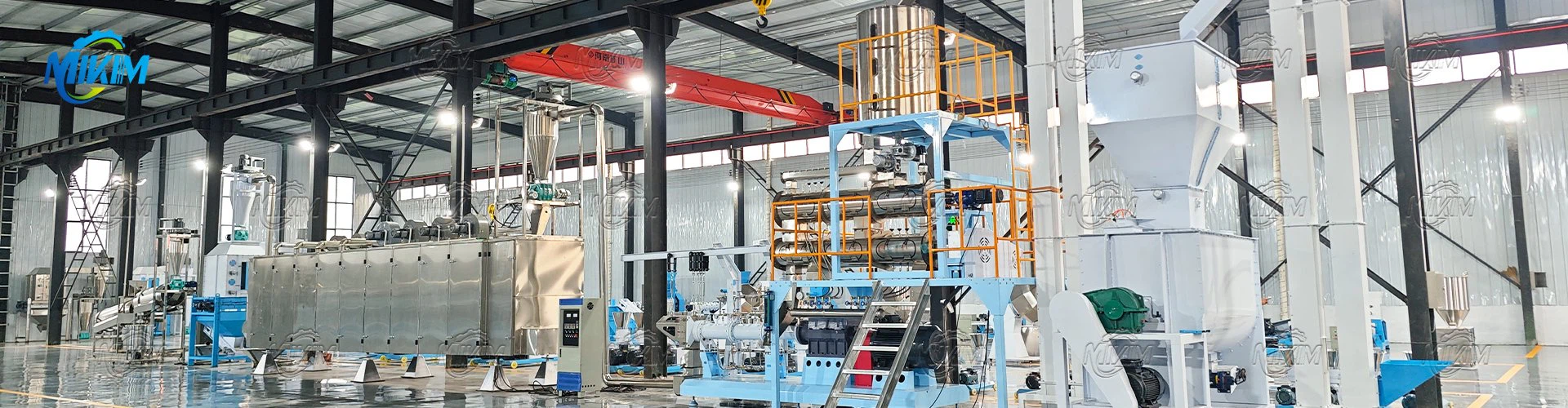
Step 1: Raw Material Intake
The process begins with the raw materials: grains, feed additives, minerals and vitamins. Each ingredient is received, checked and stored separately, and the intake system records the quantity and quality of every delivery. The accuracy of this first stage determines the accuracy of the whole batch, because no downstream process can correct a wrong ingredient or a wrong quantity.
Step 2: Mixing and Crushing
In the mixing and crushing stage, the raw materials are combined in the proportions set by the formula and pulverized into fine particles. The order matters: coarse grains are crushed first, then the crushed material is mixed with the fine ingredients and additives so that the premix is distributed evenly. This stage ensures that the feed is well mixed and easily digested in the subsequent processing, and the particle size distribution produced here directly affects the quality of the pellets.
Step 3: Conditioning
Before pelleting, the mixed material passes through a conditioner where steam and moisture are added. Conditioning softens the material, gelatinizes a portion of the starch and activates natural binders, which makes the material compress more easily in the die and produces harder, more durable pellets. The conditioning time and steam addition are set according to the formula, and they are among the most important parameters for pellet quality.
Step 4: Pelleting
In the pelleting stage, the conditioned feed is fed into the pelletizing machine, where it is compressed and processed at high temperature to form pellets. The die hole size and compression ratio determine the pellet diameter and density, and the feed rate into the die must be steady so that pellet quality remains uniform. The heat generated during compression contributes to starch gelatinization and kills surface bacteria.
Step 5: Cooling, Screening and Packaging
Hot pellets leaving the die are soft and fragile. A counter-flow cooler reduces their temperature and moisture, after which a screening system removes fines and broken pellets. The finished pellets are then weighed and packed. Fines removed at screening are returned to the process, so the line wastes little material, and the packaging stage records the batch for traceability.
Control and Monitoring
The whole workflow is coordinated by the line's control system, which monitors feed rates, temperatures, motor loads and levels at each stage. The operator's job is to keep the line in its optimal window: steady feed, correct conditioning, even pelleting and complete cooling. When the workflow is understood, problems become easy to trace to their source.
Frequently Asked Questions
What is the first step in the feed production workflow? Raw material intake, where each ingredient is received, checked and stored separately.
Why is conditioning needed before pelleting? Conditioning adds steam and moisture, softening the material and gelatinizing starch to produce harder, more durable pellets.
What happens to fines removed during screening? Fines and broken pellets are returned to the process, so the line wastes very little material.
Why must pellets be cooled after pelleting? Hot pellets are soft and fragile; cooling reduces temperature and moisture so they harden and store well.
What does the control system monitor? Feed rates, temperatures, motor loads and material levels at every stage, keeping the line in its optimal operating window.