
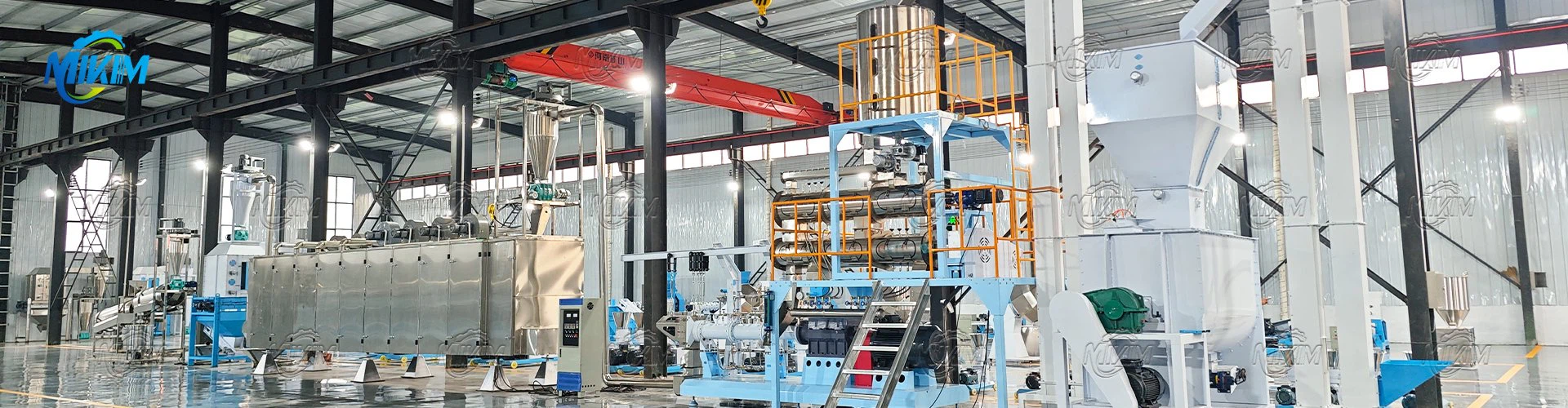
First, observe the operating status of the equipment, such as whether the motor current, temperature, vibration and other parameters are normal. If any abnormality is found, the machine should be stopped for inspection immediately, and the operation should be continued after the fault is eliminated. Secondly, the feed speed and flow rate of the raw materials should be monitored to ensure the stable supply of raw materials. At the same time, the product quality should be checked regularly, such as whether the particle size, density, color, etc. meet the requirements, so as to adjust the process parameters in time.

| Model | 70 | 85 | 100 |
| Installed Power | 90KW | 145KW | 170KW |
| Real Consumption | 63KW | 102KW | 120KW |
| Capacity | 150-200KG/HR | 300-500KG/HR | 1000-1500KG/HR |
During the operation of the feed extruder, various faults are inevitable. Once a fault occurs, the machine should be stopped for inspection immediately to find out the cause of the fault and deal with it. Common faults include motor failure, electrical failure, mechanical failure, etc. For motor failure, check whether the motor is overloaded, short-circuited or open-circuited, and replace the damaged motor or electrical components in time. For mechanical failure, check whether the transmission parts are worn, loose or broken, and replace or repair the damaged parts in time. When handling faults, pay attention to safe operation to avoid secondary accidents.
In the operation of the feed extruder, safety is always the primary consideration. First, ensure that the safety protection measures of the equipment are complete and effective, such as protective covers and safety nets. Secondly, strictly abide by the operating procedures and safety regulations, and prohibit illegal operations or unauthorized changes in process parameters during the operation of the equipment. At the same time, strengthen safety education and training for operators to improve their safety awareness and operating skills. In addition, regularly maintain and service the equipment to promptly discover and deal with potential safety hazards.