
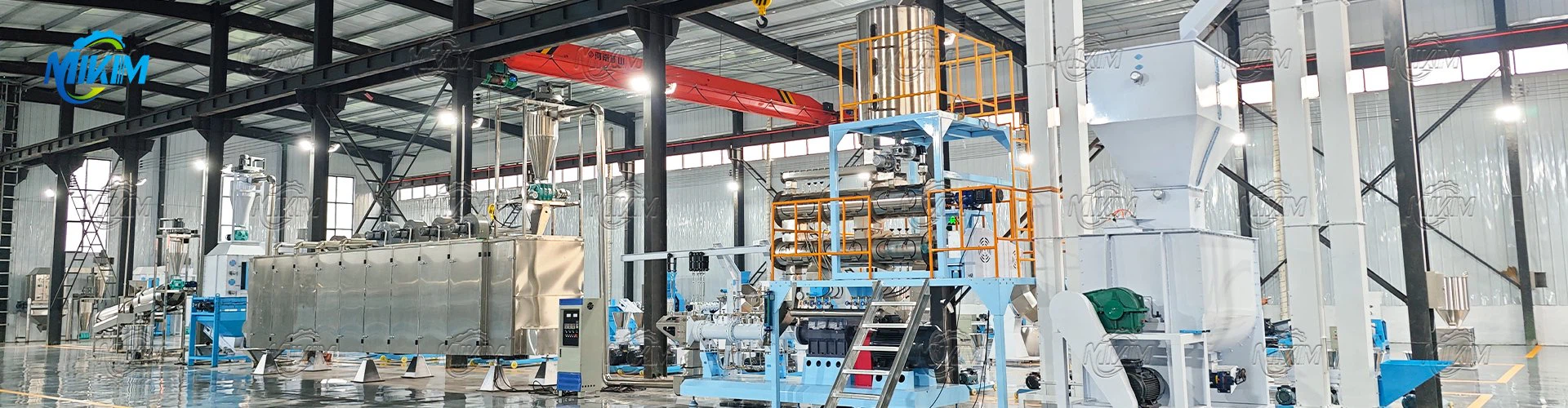

Key Benefits of a Dog Food Extrusion Machine
1. Integrated Operation Improves Production Efficiency
An integrated dog food extruder and pellet-mill design enables fully automated operation from raw-material pretreatment, extrusion and maturation, pelleting and cooling, with minimal manual intervention. Typical capacities: small units 100–200 kg/h, medium 300–500 kg/h, large 1 t/h and above (depending on model). Compared with traditional separate extrusion-and-pelleting equipment, integrated operation can reduce labor costs by about 30–40% and increase production efficiency by over 50% (example figures), suiting large-scale production.
2. Optimized Energy Consumption Lowers Operating Costs
The energy-saving design of the twin-screw extruder, synchronized with pellet-mill parameters, maximizes energy utilization. High-quality twin-screw extruders with permanent-magnet synchronous motors reduce energy consumption by about 10–15% versus traditional motors; precise parameter synchronization avoids idle or imbalanced running. As an example, per-ton power consumption can be controlled at 75–85 kWh versus 100–120 kWh for conventional lines - about 2000–5000 RMB/month electricity saving at 8 h/day operation (varies with local tariffs and output).
3. Low Failure Rate Reduces Downtime Losses
Core components (screw and barrel) made of wear-resistant bimetal composite materials have a long service life. The intelligent early-warning system monitors the operating status (temperature, pressure, speed) of the extruder and pellet mill in real time and alarms on abnormalities, preventing fault escalation. Full automation reduces human error - for example, the downtime rate can drop from over 10% to under 2%, reducing downtime losses by roughly 10,000–20,000 RMB per year (example figures).
4. Note
All figures above are typical/example values - verify with your model, electricity tariff and production schedule. Safety: follow lockout/tagout procedures when servicing the integrated line.