
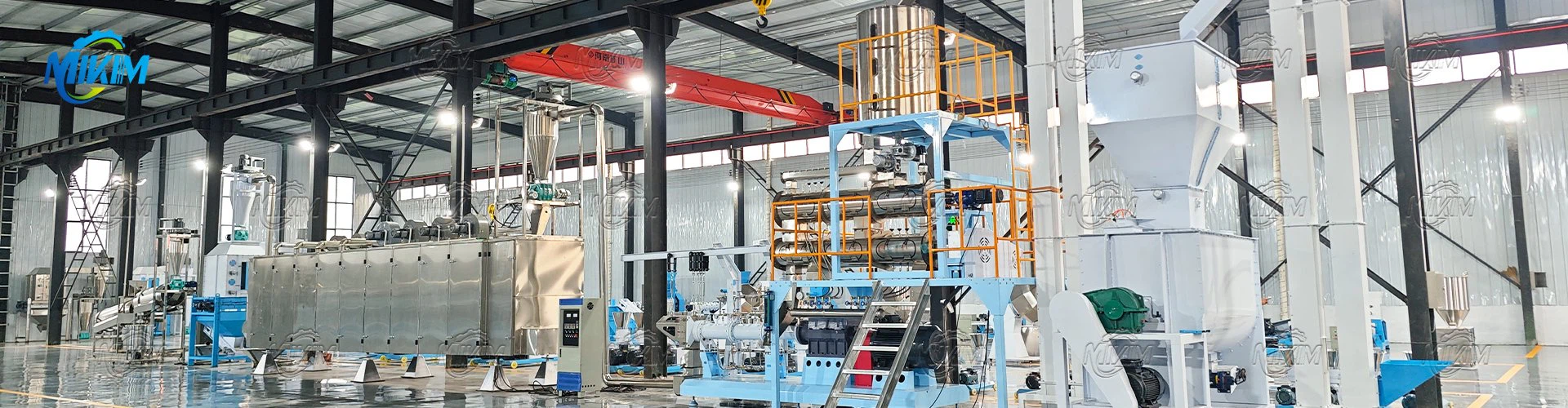
This intelligent operation method not only improves the efficiency of feed production, but also reduces the error rate in the production process, ensures the quality of feed, and thus better meets the needs of the farming industry.
First of all, the digital operation of the feed processing unit makes the entire production process more transparent and controllable. By introducing precise digital control, the operating status of the equipment can be monitored in real time, and possible problems can be discovered and solved in time. For example, by real-time monitoring of parameters such as production speed, temperature, and humidity, it can be ensured that the quality of feed is stable within an ideal range. In this way, not only the quality of feed can be improved, but also the losses caused by quality problems can be reduced.
Secondly, digital operation can also greatly improve the efficiency of feed production. Traditional feed production methods often require a lot of manual operations, which is not only time-consuming and labor-intensive, but also prone to errors. However, digital operation can realize automated production processes and reduce the possibility of manual intervention. This means that workers can focus more on supervising and maintaining equipment instead of performing heavy operating work. In this way, production efficiency can be greatly improved, while also reducing the work pressure of workers.

|
Model |
Capacity |
Power |
|
MK-150 |
120-150kg/h |
4kw |
|
MK-210 |
200-300kg/h |
7.5kw |
|
MK-260 |
500-600kg/h |
15kw |
|
MK-300 |
700-800kg/h |
22kw |
In addition, digital monitoring can also help managers better understand and predict production situations. By collecting and analyzing a large amount of production data, managers can more accurately understand the status of the production process and make more scientific decisions. For example, by mining historical data, managers can discover key factors in feed production and develop more effective production strategies.
In general, the digital operation and monitoring of feed processing units provide strong support for intelligent farming. Through the application of digital technology, we can not only improve the efficiency and quality of feed production, but also reduce the cost and risk of production.