
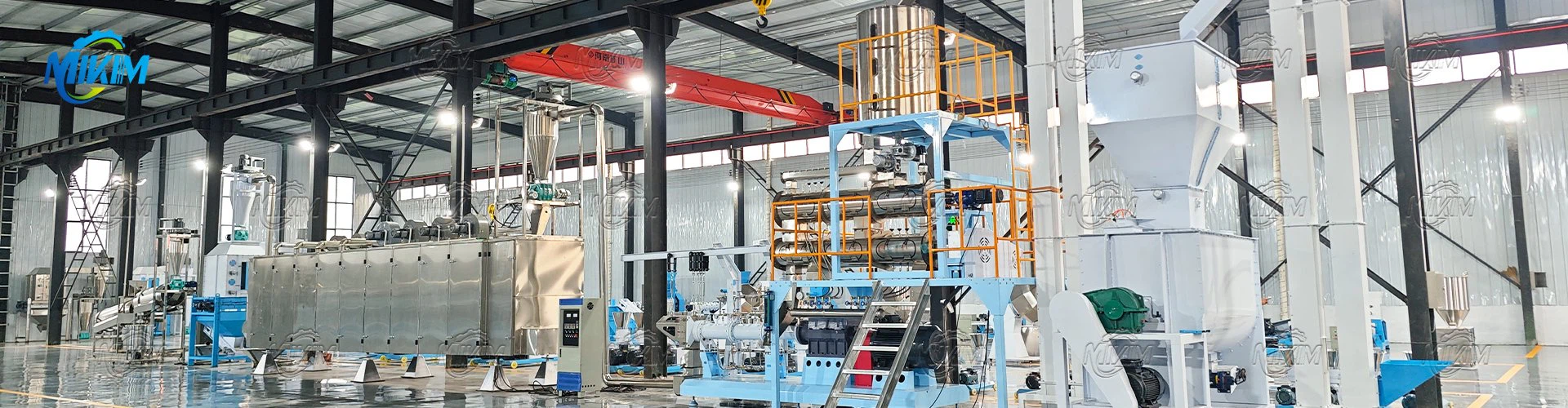
Bulk grain received from farms usually includes grain by-products and impurities. Cleaning operations are the removal of these impurities using equipment and systems such as magnets, screens, dust collectors, etc. to ensure that the stored grain is of good quality and to protect the machine during subsequent processing steps. Milling is an operation that reduces the particle size of feed and increases its specific surface area, which enhances animal digestibility and feed utilization, and also improves the processing quality and efficiency of subsequent process steps such as batching, mixing and pelleting.
The process of dosing and mixing refers to the combination of bulk dry and liquid ingredients into a value-added, homogeneous proportioning mixture. Bulking is the process whereby moist, swellable starch or protein material is plasticized in a tube by a combination of moisture, pressure, heat and machinery. This results in an increase in the temperature of the product in the tube, pasteurization of the starch components, denaturation of the proteins, stretching or restructuring of the tactile components, and exothermic expansion of the expanded material. In the submerged feed process, the treated feed pellets enter the pelletizing equipment where they are compressed into pellets in the pelletizing chamber by means of rollers and dies.
