
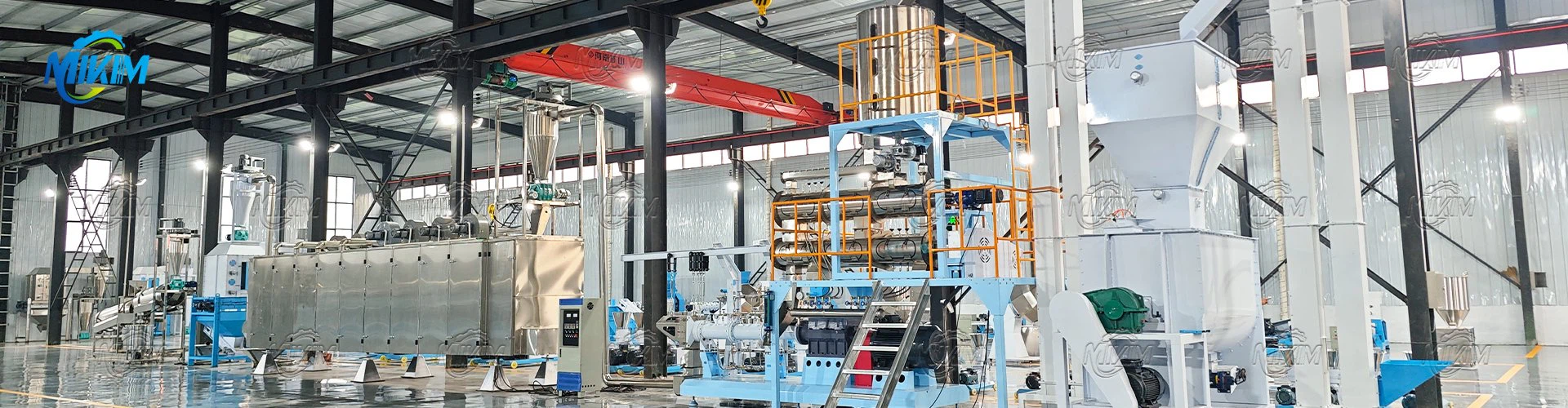
Efficient optimization of aquatic feed production line is the key to improving production efficiency, reducing costs and ensuring feed quality. Here are some methods and strategies to optimize aquatic feed production line:
1. Formula optimization: By optimizing feed formula, rationally select the ratio of raw materials and additives to meet the nutritional needs of different aquatic animals. Formula optimization can be carried out with the help of nutrition software and professional consultants to improve the nutritional value and digestibility of feed.
2. Raw material storage and supply chain management: Ensure the timely supply and storage management of raw materials to reduce the stagnation of production lines due to insufficient or interrupted raw materials. Optimize supply chain management to ensure the quality and reliability of raw materials and reduce inventory costs and losses.

|
Model |
Capacity |
Power |
|
MK-150 |
120-150kg/h |
4kw |
|
MK-210 |
200-300kg/h |
7.5kw |
|
MK-260 |
500-600kg/h |
15kw |
|
MK-300 |
700-800kg/h |
22kw |
3. Automation and intelligent control: Introduce automation equipment and intelligent control systems to improve the automation level and operating efficiency of production lines. Automated control can reduce human errors and operational errors and improve the stability and consistency of production lines.
4. Process optimization: Analyze and evaluate the process flow in the production line, identify bottlenecks and inefficient links, and take measures to optimize them. Production efficiency and capacity can be improved by improving equipment layout, adjusting production sequence, simplifying operation steps, etc.
5. Energy-saving and environmental protection measures: Use energy-saving equipment and technology to optimize energy consumption. At the same time, strengthen waste treatment and environmental protection, and comply with relevant environmental laws and regulations and standards.
6. Maintenance and care management: Establish regular maintenance and care plans to ensure the normal operation and life of the equipment. Regularly check the wear of the equipment, replace wearing parts in time, and maintain the stability and production efficiency of the equipment.
7. Process monitoring and data analysis: Establish a real-time monitoring system to monitor and record the key parameters of the production line. Through data analysis, identify potential problems and improvement opportunities, and take timely measures to optimize the production process and product quality.