

Key Takeaways
- Pelleting raises nutrient digestibility through heat conditioning and starch gelatinization, so animals extract more value from the same formula.
- Dense, uniform pellets cut dust, spillage and selective eating losses during feeding, handling and transport.
- Granular feed stores and ships more compactly than mash, lowering warehouse and freight cost per ton.
- A feed mill pellet machine runs continuously, letting one operator convert raw powder into finished feed in a single production line.
Chicken Pellet Making Machine Working Video
I am interested in this product
1. Better Digestibility and Feed Utilization
A animal feed pellet machine compresses powdered raw materials into uniform, dense granules under heat and pressure. The short conditioning stage gelatinizes part of the starch, which makes the feed easier for monogastric and ruminant animals to break down. The result is a measurable improvement in nutrient utilization: animals need less feed to gain the same weight when the formula is pelleted rather than fed as loose mash.
Pellet quality directly depends on two process parameters: raw material particle size (commonly 3–5 mm for small flat-die machines) and moisture content (10–12% before pressing). Operating inside this window keeps pellets firm, reduces fines, and protects the die and roller from premature wear.
2. Less Waste During Feeding, Handling and Transport
Because pellets have a higher density than loose powder, they scatter less from feeders, resist being blown away in open barns, and cannot be sorted by the animal. Selective eating disappears: the animal consumes every ingredient in the formula instead of picking out palatable particles and leaving fines behind. These savings add up quickly on a commercial farm, where feed is typically the single largest variable cost.
3. Easier Storage and Cheaper Logistics
Granular feed packs more densely into bags, bins and containers than mash feed. A warehouse or container can therefore hold a larger tonnage of pelleted feed for the same volume, which directly lowers storage and freight cost per ton. Pellets also absorb less moisture and are easier to keep mold-free during long ocean shipments - an important factor for export-bound farms and feed plants.
4. Continuous Production and Higher Output per Operator
Unlike batch mixing alone, a pellet feed mill machine supports continuous, stable production: raw powder is fed in, pellets come out at a steady rate until the shift ends. This reduces idle time and lets one or two workers run the whole pressing operation, cutting labor cost per ton of finished feed.
5. One Machine, Multiple Species
A multi-purpose feed pellet mill is not limited to one animal. By changing the die aperture, the conditioner settings and the formula, the same machine presses feed for cattle, sheep, pigs, rabbits, chickens, ducks, geese, fish and birds. Farms that raise several species can consolidate their equipment instead of buying separate machines.
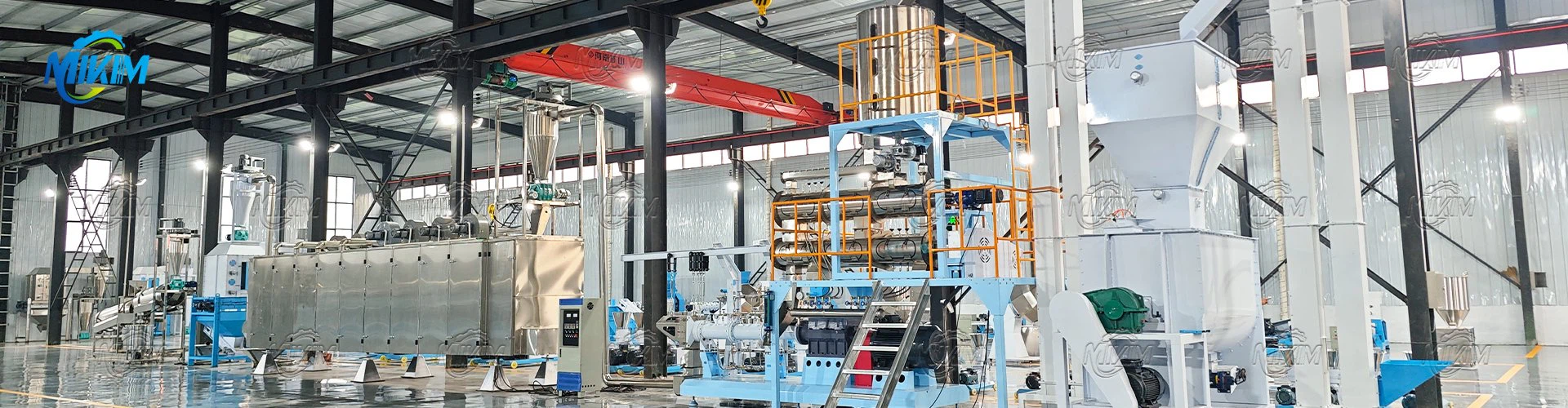
Mikim offers flat-die pellet mills from MK-125 (80–100 kg/h) to MK-400 (1,200–1,500 kg/h) as well as complete animal feed pellet lines for larger operations. See the animal feed pellet mill page for specifications.


6. Lower Overall Feed Cost
The combined effect of higher digestibility, lower dust loss, compact storage and stable output is a lower effective cost per kilogram of live-weight gain. Equipment investment is recovered through reduced feed wastage and better feed conversion, which is why pelletizing is standard practice in modern commercial animal production.
FAQ
What raw materials can a small poultry feed making machine process?
Grains, soybean meal, fish meal, corn, grass meal and other powdered ingredients. The same machine can be switched between livestock, poultry and aqua feed formulas by changing the die and adjusting conditioning.
Is pelleted feed better than mash feed?
For most growing animals, yes. Pelleting increases starch gelatinization, improves nutrient digestibility, eliminates selective eating, and reduces dust and handling loss compared with mash feed.
Does an animal food pellet machine save storage and transport cost?
Yes. Pelleted feed is denser and more compact than loose mash, so it occupies less warehouse space, loads more per container, and resists moisture and mold during long-distance shipping.
Can one animal feed pellet making machine serve different animals?
Yes. Multi-purpose flat-die and ring-die pellet mills can produce pellets for cattle, sheep, pigs, rabbits, chickens, ducks, geese, fish and birds by adjusting the die aperture and formula.
References
- Food and Agriculture Organization of the United Nations (FAO) - Animal Production and Health. fao.org/animal-production
- International Organization for Standardization (ISO) - Standards for agricultural machinery and feed processing. iso.org search: feed processing
- Mikim - Animal Feed Pellet Mill product specifications (MK series). mikim-machinery.com/feed-pellet-machine
Get a Quote for Your Farm
Tell us your daily feed output, target animals and available power supply, and our engineers will recommend the right model and die configuration. Contact us at Info@mikimz.com or call +86 199 1372 6062.