
1. What the 4 mm Dry-Type Test Verifies
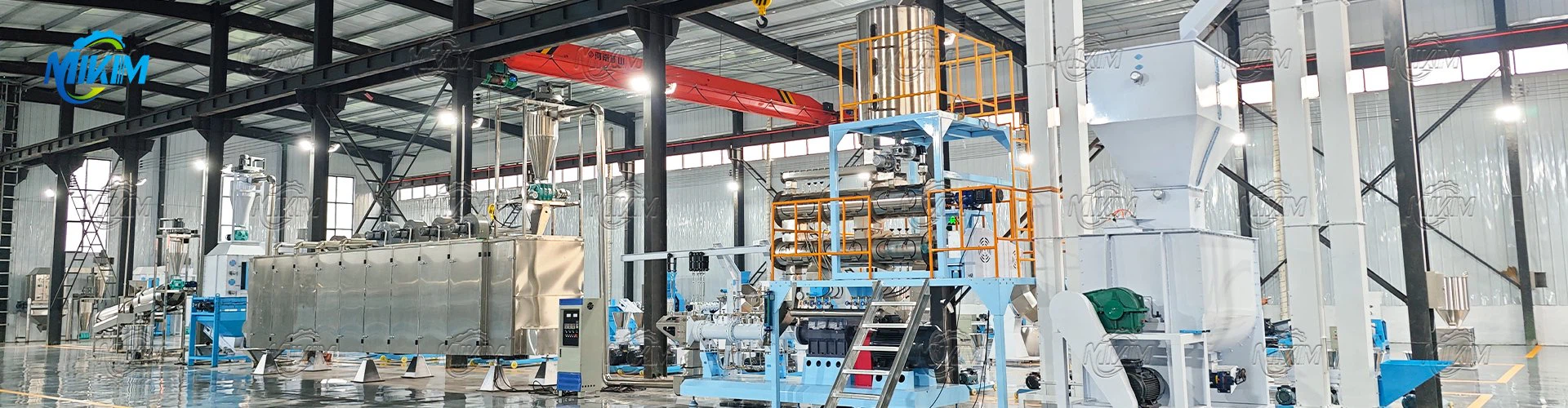
The 4 mm dry-type dog food processing machine test operates the extruder with real pet-food formulas to verify pellet size accuracy, extrusion stability, pellet texture and continuous production performance for 4 mm pellets before delivery.
2. Why 4 mm Pellet Testing Matters
Pellet size directly affects pet chewing behavior, digestion efficiency, feeding acceptance and packaging consistency.
4 mm pellets are used for medium-size dog food, juvenile pet feed and balanced dry pet-food products.
3. The Dry-Type Principle
A dry-type pet food extruder uses mechanical friction and pressure to generate heat during extrusion - no external steam boiler system. Characteristics: simpler structure, lower investment cost, compact production setup - suitable for small and medium pet-food production.
4. The Six-Step Test Process
- Raw material preparation: corn flour, soybean meal, meat powder, fish meal, vitamin premix; check powder fineness, moisture balance, formula consistency.
- Feeding stability: smooth feeding flow, no blockage, stable screw transport speed.
- Extrusion pressure: compression and friction heat; monitor pressure stability, temperature consistency, expansion behavior.
- 4 mm pellet forming: diameter accuracy, roundness, surface smoothness, structural consistency.
- Dryness and hardness: hardness balance, break resistance, moisture stability.
- Continuous running: motor temperature stability, extrusion continuity, output consistency, screw wear behavior.
5. Dry vs Wet Extrusion
| Aspect | Dry Type | Wet Type |
|---|---|---|
| Heat source | Friction/pressure | Steam conditioning + friction |
| Boiler | Not required | Required |
| Investment | Lower | Higher |
| Starch gelatinization | Moderate | Higher (better expansion/digestibility) |
| Best fit | Small/medium lines | Medium/large production |
6. Bottom Line
The dry-type 4 mm extruder is the low-investment entry point for small and medium pet-food producers: no steam boiler, compact footprint and reliable pellet quality when tested and operated correctly. For higher gelatinization and output, wet-type systems justify their extra cost.
Company Profile