1.What Is the 3 mm wet Type fish feed production equipment Test?
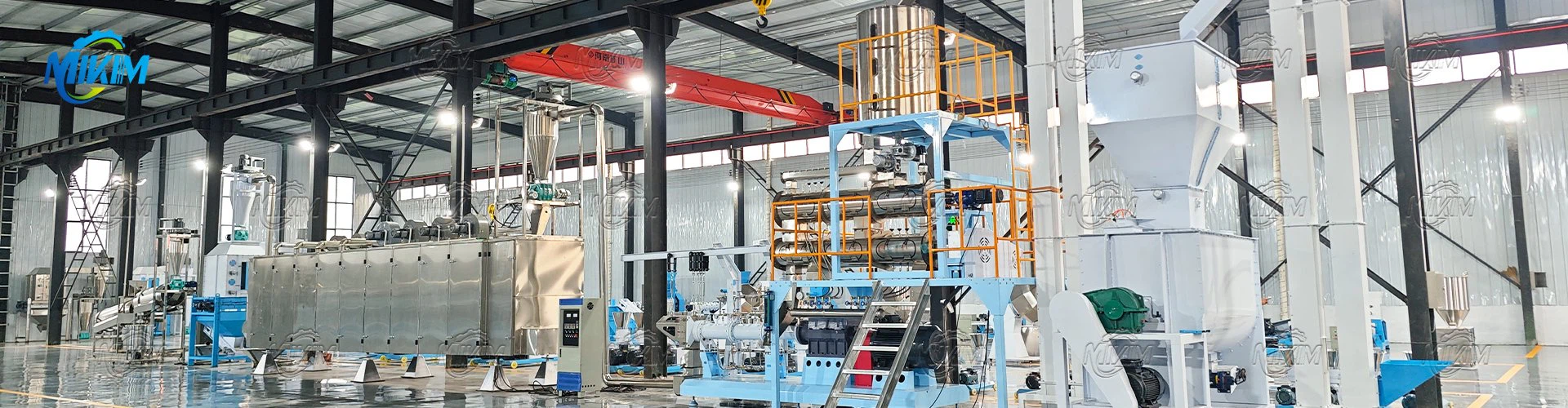
The 3 mm wet type small fish feed pellet maker machine test is a factory testing process where a wet type fish feed extruder is operated using real aquatic feed formulas to verify 3 mm pellet forming accuracy, floating performance, steam conditioning stability, and continuous extrusion efficiency before delivery or commercial production use.
2. Why 3 mm Pellet Testing Is Important?
3 mm floating fish feed pellets are commonly used for:
- juvenile tilapia
- medium-growth fish stages
- intensive pond farming systems
Pellet size consistency directly affects:
- fish feeding efficiency
- feed conversion ratio (FCR)
- floating stability in water
- feeding competition behavior
3. What Is a wet Type floating fish feed pellet mill?
A wet Type fish feed extruder machine uses external steam conditioning before extrusion. Steam and moisture soften raw materials before entering the extrusion chamber.
This process improves:
- starch gelatinization
- pellet expansion
- floating stability
- feed digestibility
4. Step-by-Step 3 mm Pellet Testing Process
Step 1: Raw Material Preparation Test
Materials used during testing may include:
corn flour
soybean meal
fish meal
wheat flour
vitamin premix
Technicians check:
raw material fineness
moisture ratio
formula consistency
Step 2: Steam Conditioning Test
This is the key wet type feature.
Engineers monitor:
steam injection balance
material softening condition
temperature stability before extrusion
Step 3: Extrusion Pressure Stability Test
Inside the extruder:
materials are compressed under pressure
temperature increases gradually
expansion begins before discharge
Observed during testing:
stable extrusion pressure
smooth material flow
no blockage inside barrel
Step 4: 3 mm Pellet Forming Test
This is the most important testing stage.
Technicians inspect:
exact 3 mm pellet diameter
pellet roundness
surface smoothness
cutting precision
Step 5: Floating Test in Water
Pellets are tested immediately after production.
Observed results:
floating duration
pellet integrity in water
resistance to fast disintegration
Step 6: Continuous Running Stability Test
Machine operates continuously under load.
Checked:
steam system balance
extrusion continuity
motor temperature stability
pellet consistency over time
5. Why Wet Type Extrusion Performs Better for 3 mm Floating Feed
Better Pellet Expansion
Steam conditioning improves internal pellet structure.
Higher Floating Stability
More uniform expansion helps pellets float longer.
Improved Digestibility
Better starch gelatinization supports fish nutrient absorption.
More Stable Continuous Production
Wet type systems maintain smoother extrusion conditions.
6. Real Factory Test Data
| Item | Result |
|---|---|
| Machine Type | wet Type floating fish feed pellet maker machine |
| Pellet Size | 3 mm |
| Floating Rate | ≥95% |
| Capacity | 300–1000kg/h |
| Formula Type | Floating fish feed |
| Operation Mode | Continuous production |
| Application | Tilapia & freshwater fish feed |
7. Common Problems Checked During Testing
Problem: uneven 3 mm pellet size
Possible cause:
unstable extrusion pressure
inconsistent cutting speed
Problem: pellets sink too quickly
Possible cause:
insufficient starch gelatinization
poor steam conditioning
Problem: pellet cracking
Possible cause:
incorrect moisture balance
unstable drying conditions
8. Suitable Applications
This machine is suitable for:
commercial fish feed factories
tilapia feed production
catfish feed manufacturing
floating aquatic feed processing
medium and large aquaculture farms
9. FAQ
Why is 3 mm pellet testing important?
Because pellet size consistency affects fish feeding efficiency and feed quality.
What is the advantage of wet type extrusion?
Steam conditioning improves pellet expansion and floating performance.
Can the machine continuously produce 3 mm floating feed?
Yes, testing verifies stable continuous production.
Does the test include floating verification?
Yes, pellets are tested directly in water.
Company Profile