

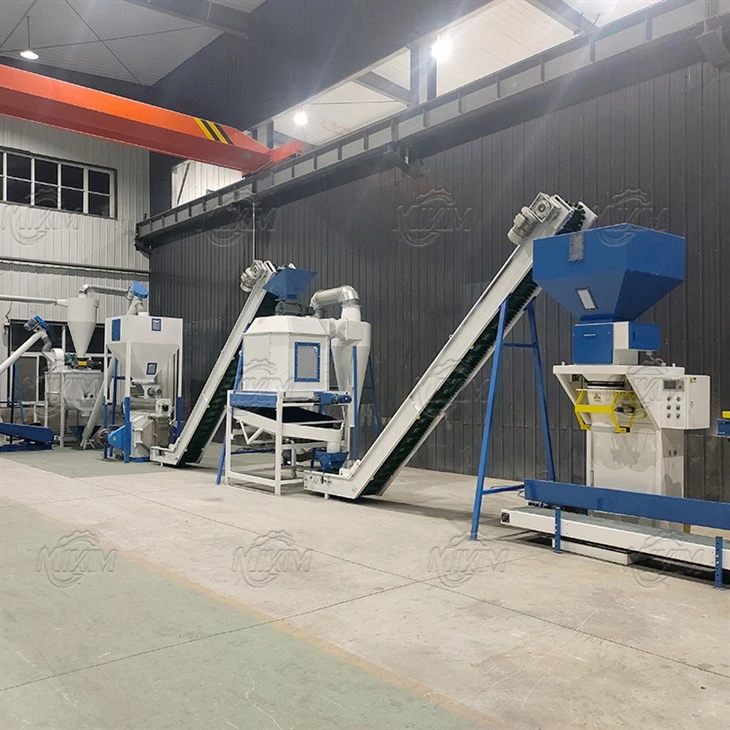
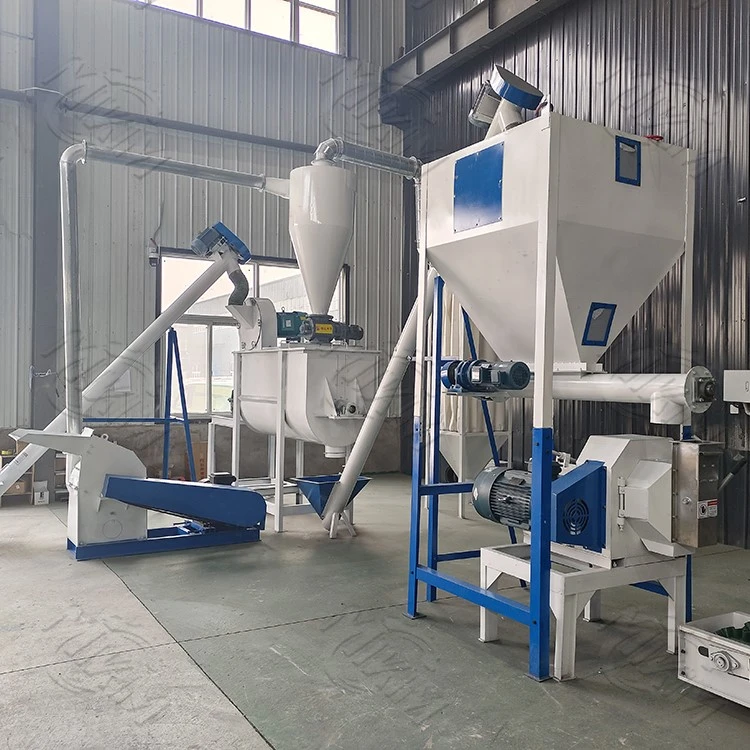
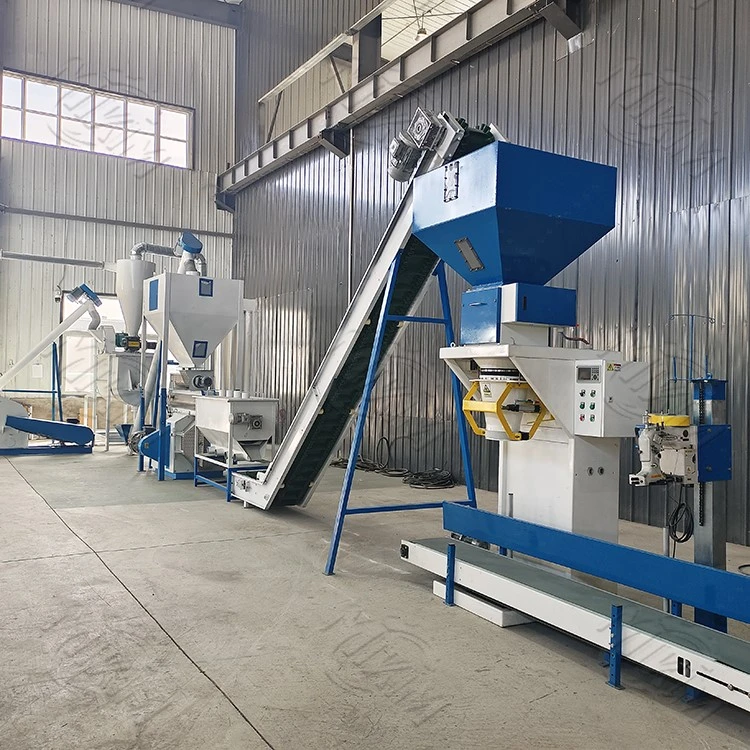
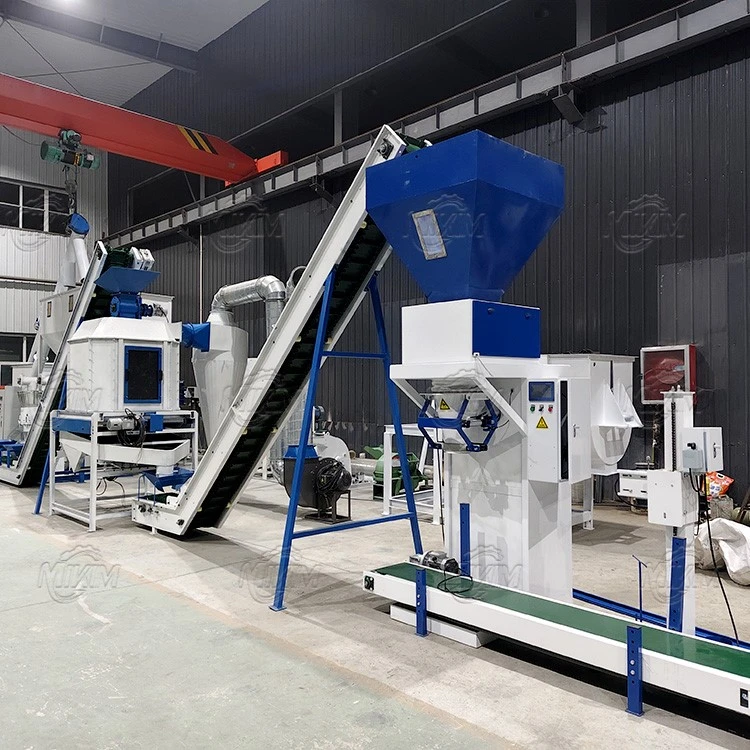
1.5–2 t/h semi-industrial poultry feed production line
Send Inquiry
Product Details of1.5–2 t/h semi-industrial poultry feed production line
Tianjin Mikim Technique Co., Ltd. is one of the most experienced manufacturers and suppliers of 1.5–2 t/h semi-industrial poultry feed production line in China. If you're going to buy cheap 1.5–2 t/h semi-industrial poultry feed production line made in China, welcome to get more information from our factory. All our products are with high quality and low price.
Quick answer
A 1.5-2 t/h semi-industrial poultry feed production line makes mash and pellets for starter, grower, finisher, pullet and layer feed on one frame. Grinding and mixing run at 1-2 t/h, the ring die press holds 1-2 t/h at 24.05 kW, and the full equipment list adds to 56.55 kW.
In this guide



01
Can an animal feed powder production line Produce All Five Poultry Feed Stages?
Yes. One grinding and mixing train serves starter, grower, finisher, pullet and layer, and each stage shifts the screen, the die hole and the conditioning moisture rather than the machines.
FIVE STAGES, TWO FORMS
Five rations and two product forms come off the same frame. The grinding screen sets meal fineness, the die sets pellet diameter, and the conditioning moisture carries the rest of the difference between stages.
| Stage | Mash output | Pellet output | Crumble note |
|---|---|---|---|
| Starter | Hammer mill at 1-2 t/h on a fine screen, 500 kg per mixer batch | Ring die at 1-2 t/h, then through the crumbler | Narrow roll gap and a tight screen set the chick crumb |
| Grower | Hammer mill at 1-2 t/h on a medium screen, 500 kg per mixer batch | Ring die at 1-2 t/h, then through the crumbler | Wider roll gap than starter, same crumbler frame |
| Finisher | Hammer mill at 1-2 t/h on a coarse screen, 500 kg per mixer batch | Ring die at 1-2 t/h, whole pellet | No crumbler pass, pellet leaves the cooler as it is |
| Pullet | Hammer mill at 1-2 t/h on a coarse screen, 500 kg per mixer batch | Ring die at 1-2 t/h, whole pellet | No crumbler pass, sieve holds the pellet size |
| Layer | Hammer mill at 1-2 t/h on a coarse screen, 500 kg per mixer batch | Ring die at 1-2 t/h, whole pellet | No crumbler pass, sieve holds the pellet size |
Table 1: Guaranteed output by stage and form on the 1.5-2 t/h semi-industrial poultry feed production line.
Mash is paced by the hammer mill and the 500 kg mixer batch, pellet by the ring die, and crumble by the roll gap and screen that follow it.

Maize and soybean meal base for five stages
All five formulas start from the same base. Ground maize carries the energy, soybean meal carries the protein, and the mineral and premix tail is what changes most between stages.
A plant keeping three screens and four die sets on the rack moves from a starter run to a layer run in one shift without touching a machine frame.
Premix weighed per 500 kg batch
Premix is the one ingredient never measured by the shovel. It is weighed on its own scale for each 500 kg batch and added during the last stretch of the cycle.
An inclusion that small disappears into a batch already half mixed, so an error here cannot be corrected downstream. Weighing per batch also leaves a record that matches the day's batch count at the bagger.
The chicken feed making machine for five stages page shows the same split with the machine callouts drawn onto the floor plan.
02
Do We Need Automatic Dosing or Can Operators Weigh by Hand?
Operators weigh by hand on this size of plant. Dosing here is a table, a platform scale and a 1.5 kW screw conveyor, not a bank of ingredient bins, and that is deliberate rather than a shortcut.
NO AUTOMATIC BATCHER
A plant selling five stages changes formula several times a week. A batching bank then spends its time on cleanout, which costs more clock time than a man with a scale and a formula sheet.
Manual weighing against a 500 kg batch
The operator reads the formula sheet, weighs each ingredient into sacks, and tips them into the conveyor hopper. That conveyor drops the meal into the mixer as one controlled stream rather than three piles.
Automatic batching earns its cost when a plant runs one formula for weeks. At five stages a week the manual route is the faster one.
03
How Should Oil and Premixes Be Added to the Mix?
Oil is sprayed into the mixer onto the moving meal stream, and premix follows it, weighed per batch and tipped in late in the cycle.
SPRAY, NOT POUR
Pouring oil onto a still meal surface wets one layer and leaves the rest dry, and that wetted layer then blocks through the die while the dry fraction crumbles.
Oil sprayed over the moving meal stream
The nozzle sits above the mixer body and sprays onto the meal as the paddles throw it. Spraying over a rolling stream divides the oil into droplets that coat individual particles.
Premix goes in after the oil is taken up. Premix added first would be wrapped and held in clumps the mixer cannot break apart.

04
Why a Ring Die livestock feed pellet mill Instead of a Flat Die?
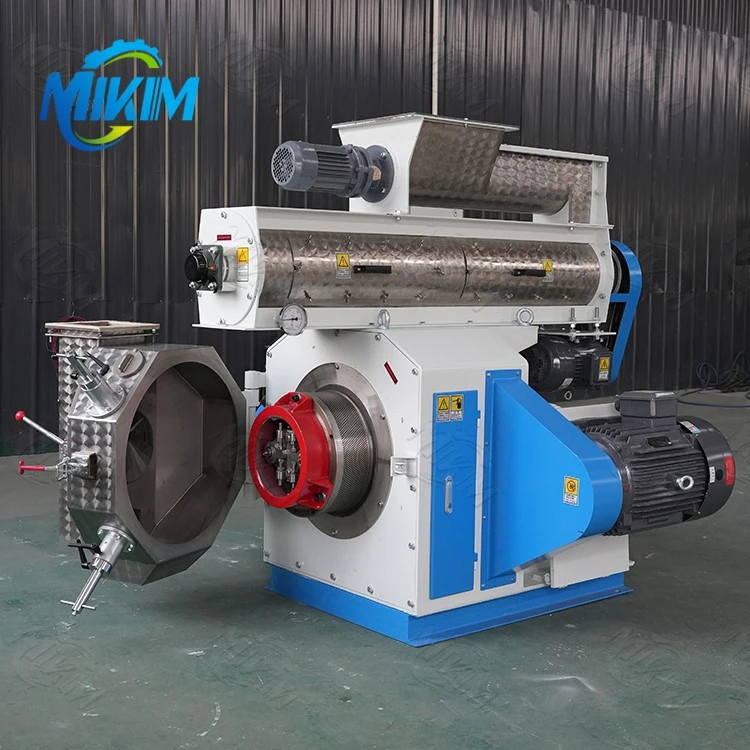
Because a Ring Die poultry pellet making machine holds 1-2 t/h on 24.05 kW with the die loaded evenly around its circumference, which is what a line selling five stages needs from one press.
RING DIE, 24.05 kW
The press draws 22 kW, its feeder 0.55 kW and its conditioner 1.5 kW. That total is quoted as one row in the motor list, because the three motors start and stop as one machine.
Ring die and rollers on the main shaft
The die and rollers sit on the main shaft inside a guarded chamber, fed by a variable feeder so motor load can be held steady. A full automatic lubrication system serves the rollers, main shaft, gears and bearings.
Die sets at 6, 8, 10 and 12 mm
Four die sets come as standard at 6, 8, 10 and 12 mm. Changing a die opens the 2.5-10 mm range, and sizes outside it are made to order.
The die set is the cheapest way to change what the plant sells, so four sets count as product range rather than spares. The animal feed pellet mill with a ring die page covers the same frame in single machine form.

05
How Much Steam Does the Conditioner Need?
Steam comes from the site boiler, and the conditioner is the only point on the line that uses it. The press ships with its own 1.5 kW conditioner motor, so the site provides the steam line behind it.
SITE BOILER, NOT THE PRESS
The quotation covers the conditioner and its motor. The boiler, the steam pipe and the trap belong to the site, and they are the items to confirm before the line is shipped.
Conditioning does four jobs. It heats and wets the meal, it gelatinises starch so particles swell and bind, it denatures protein so the pellet holds together after cooling, and it cuts wear on the die and rollers while lowering the power drawn per ton.
Mash moisture of 12 to 20 percent at the die
Meal must be ground to a powder before it reaches the press, and it must enter at 12-20 percent moisture. Coarse meal bridges in the chamber and blocks the holes, and meal outside the window either will not bind or turns to paste on the die face.
Grinding therefore sits upstream of everything, and moisture is read at the mixer discharge, not at the press.
06
Can the Same animal feed processing machine line Deliver Mash and Pellets?
Yes. Both forms leave the same plant, and the switch is a routing decision rather than a rebuild.
A ROUTING SWITCH
Ground, dosed and mixed meal is already finished mash. The pellet route adds conditioning, pressing, cooling and sieving, and nothing is bolted on or taken off to move between them.
Mash sold straight from the mixer
Mash runs from the mixer discharge to the conveyor, past the press, and up to the bagger. Nothing is added and nothing is heated, so a mash order can be filled on a day when the press is being serviced.
The one caution is that both forms share the sieve, so the screen has to match what is being packed.
Pellet takes the longer path. The same batch is conditioned, pressed, cooled, crumbled where the stage calls for it, sieved and bagged, and one 500 kg batch splits between the two forms when a buyer wants a trial quantity of each.
07
Do We Need a Crumbler for Starter and Grower Feed?
Only if starter or grower crumble is on your price list. The crumbler is a decision rather than a standard item, and finisher, pullet and layer rations skip it.
OPTIONAL BY STAGE
Starter and grower sell as small uniform particles, and a whole pellet of the right diameter is still too large for a chick in its first weeks. A plant selling mash and whole pellets leaves the crumbler out.
Crumbler rolls set for chick size
The unit sits between the cooler and the sieve and breaks cooled pellets across two rolls set to a gap. Starter runs a narrow gap and grower a wider one, and the screen under the rolls decides what passes as product and what returns.
Fines go back to the press rather than into the sack, so the return line belongs in the layout. Its drive is quoted with the unit itself.
08
Why Must Pellets Be Cooled and Sieved Before Bagging?
Because a pellet leaves the die hot, soft and full of steam, and a sack filled at that moment sets into a lump.
COOL FIRST
The cooler is rated 1-2 t/h and draws 1.5 kW, which keeps it in step with the press above and the mill below. From the cooler the pellet goes to the sieve, where the screen matches the form being packed.
Counter flow cooler at 1-2 t/h
Air is pulled through a moving bed of pellets against the direction of travel, so the pellet in the bed longest meets the freshest air.
Undersize material is removed before the bagger, not inside the sack. A bagger that fills straight from the die is a bagger that sells crushed pellets as weight.
09
What Is the Real Throughput at 1.5 and 2 t/h poultry feed crumbles production line?
Throughput counts after the cooler, where finished product exists in saleable form, and it comes as a band with a reason rather than a single figure.
COUNTED AFTER THE COOLER
The equipment side adds to 56.55 kW unit by unit. The catalogue line figure is 62.5 kW, and the gap is the dust fan and the control cabinet, which belong to a delivered line but to no single machine.
56.55 kW of connected load by machine
Add the driven units in the motor list and the total is 56.55 kW. That is the load the plant starts, unit by unit.
The consequence is scheduling. A day built on layer pellets at 2 t/h is a press limited day, and a stop at the press reaches the bagger within the hour. A day mixing mash and crumble spreads that load.
10
Which Stage Becomes the Bottleneck at 2 t/h animal feed pellet production line?
The press does, on every day the plant runs pellets. On a mash day the mixer sets the pace instead, which is why one number cannot describe the plant.
PRESS LIMITED
The ring die press is rated 1-2 t/h, so a 2 t/h order runs it at the top of its band and leaves no reserve. A 1.5 t/h order keeps headroom for a wet batch or a worn die.
Mixing cycle against pellet mill throughput
On mash, the gate is the mixer. A 500 kg batch is weighed, mixed, discharged and followed by the next, so output is set by how many complete batches the operator runs in a shift.
On pellet, the gate is the press, and nothing downstream slows it because the cooler matches it. Crumble adds a pass but not a limit, since the crumbler is sized above the press output.
A plant needing 2 t/h every day should schedule die changes before output drops, not after.
11
What Does the Control Panel Include and Which Safety Devices?
The panel carries overload protection on each motor, phase loss protection on the incoming supply, emergency stops at the panel and at the bagger, and interlocks between stages.
PANEL AND INTERLOCKS
Every driven unit is listed with its motor rating, because that sheet is what an electrician sizes cable and breakers from. The crumbler sits outside the total, since its drive is quoted with the unit.
| Stage | Model | Power |
|---|---|---|
| Grinding | SFSP56X30 (1-2 t/h) | 11 kW |
| Mixing | SSHJ-1.0 (500 kg per batch) | 11 kW |
| Screw conveyor | KWX50YP | 1.5 kW |
| Pelleting | SZLH-250 (1-2 t/h) | 22 + 0.55 + 1.5 = 24.05 kW |
| Cooling | SKLN11x11 (1-2 t/h) | 1.5 kW |
| Crumbling | LG-15x80 (1-3 t/h) | drive quoted with the unit |
| Lifting | TDSG10-25 | 1.5 kW |
| Bagging | DCS-Z-W-50 | 4.5 kW |
| Equipment side total | - | 56.55 kW |
| Catalogue line figure | 1-2 T/H line, Option 1 | 62.5 kW / 10 x 3 x 6 m / 20 ft / 2-3 persons / 1-12 mm |
Table 2: Machines and motor power on the semi-industrial poultry feed line. The crumbler runs on its own drive, quoted with the unit, and sits outside the 56.55 kW row.
The two totals measure different things and are never added together. The 56.55 kW row is the equipment side, unit by unit. The 62.5 kW figure is the line level figure from the catalogue, and the gap is the dust fan and the control cabinet.
Overload and interlock on the control panel
The one that earns its place daily sits between the cooler and the bagger, keeping sacks from filling while the pellet bed is still hot. Each motor carries its own overload, so a jam stops one stage rather than the line.
12
How Much Floor Space and Electrical Power Does the Line Need?
The line sits on one level in a single row from mill hopper to bagger, occupies 10 x 3 x 6 m, and draws either 56.55 kW on the equipment side or 62.5 kW at line level.
56.55 kW, 10 x 3 x 6 m
Cable and breaker sizing start from the 62.5 kW line figure rather than 56.55 kW, because the fan and cabinet sit on the same supply. A fault can be seen from one end of the building.
10 x 3 x 6 m layout on option one
Option one ships in a 20 ft container with 2-3 operators on shift. The footprint is set by three things: the conveyor run from mill to mixer, the drop from conditioner into press, and the cooler and sieve ahead of the bagger.
The turn-key animal feed pellet line layout page carries the building and civils side of the same drawing.
13
Where Is the chicken feed making line Manufactured and Can We See It Running?
The line is built in Hebei, China, and a factory video plus the full address are sent with the quotation. A reference installation in Africa and a test video of the ring die press running on poultry feed can be provided on request.
MIKIM, TIANJIN
Video of the line under power is more useful than a machine photograph. Ask for the clip of the press at 1-2 t/h and the bagger filling, because those two frames show whether the cooler and the sieve are in step.
What the factory visit covers
A visit covers the assembly bay, the test run on the buyer's own formula, and the die and roller store. The test run is the part worth travelling for, since output, pellet length and crumbler gap are settled on the buyer's material rather than on a sample.
References for African installations
References are given by country and by feed type, so a poultry line can be matched against one already running in West Africa. A short video from the installed site travels with the written reference.
14
What Does the Warranty Cover and How Fast Are Spare Parts?
The warranty covers frames and drives. Dies, rollers, hammers and crumbler rolls are wear parts and sit outside it, and the spare kit is quoted with the line rather than after a breakdown.
FRAMES IN, WEAR PARTS OUT
One die set plus one roller set plus one hammer set travels with the line. A matched reserve waits while the working set is reconditioned, which is what keeps a 2 t/h day from turning into a week of waiting.
Spare dies, rollers and hammer set
The wear list is short and predictable: die, rollers, hammers and crumbler rolls. Because the press holds 1-2 t/h at the top of its band, die condition sets output directly.
Maintenance the plant carries itself
Daily: die and roller gap, conditioner steam pressure, cooler air, bagger weight against a check sack. Planned: die and roller change as a set, hammer reversal, crumbler roll gap. Those checks carry most of the first year.
15
What Do FOB and CIF Dakar Include, and Is Training Covered?
FOB ends when the crate is loaded at the port of shipment, and CIF carries freight and insurance to Dakar. Installation, operator training and technical support are quoted as their own lines on the same sheet.
CIF STOPS AT DAKAR
Dakar is a port and Mali is inland. A CIF Dakar price covers sea freight and insurance and stops at the quay. The road haul from Dakar to the plant is a separate leg, arranged and paid separately, and it is the item most often left out of a first budget.
Sea freight to Dakar plus inland haulage is how delivery is described in the quotation, so both legs appear on one sheet and neither can be read as the other.
Training and technical support on site
Installation and operator training are handled on site in Mali. Training covers four operations: starting the press on a warm conditioner, changing a die and resetting the rollers, setting the crumbler gap, and cutting a mash batch over to pellet.
Send the formula proportions for the five stages, the daily output sold, the floor size, the incoming supply capacity and the steam source. What comes back is a machine list with the stage by stage capacity sheet, a layout drawing and two quote tiers, FOB and CIF Dakar. That package is the whole case for a 1.5-2 t/h semi-industrial poultry feed production line. Request the stage by stage capacity sheet and the first reply carries the matrix for your own stage mix.
1
What actual capacity can I expect for layer feed?
This 1.5-2 t/h semi-industrial poultry feed production line holds layer feed at 1.5-2 t/h. At 2 t/h the ring die press runs at the top of its 1-2 t/h band, which is the real constraint of the size class.
2
Can a farm pellet production line make both mash and pellet feed?
Yes. Mash leaves the mixer and goes straight to the bagger. Pellet takes the same batch through the conditioner, ring die, cooler and sieve, and starter or grower adds a crumbler pass.
3
Which stage becomes the bottleneck at 2 t/h?
The pressing stage. The press holds 1-2 t/h while the hammer mill and cooler are rated 1-2 t/h too, so nothing downstream limits it. A 2 t/h day is press limited by design.
4
Do I need a crumbler for starter and grower feed?
Fit it if starter or grower crumble is on the price list. Mill, mixer, press, cooler and bagger work without it, so a plant selling mash and whole pellets omits the unit.
5
How are oil and premix added at 500 kg per batch?
Oil is sprayed into the mixer onto the moving meal stream so it coats particles rather than pooling. Premix is weighed separately for each 500 kg batch and tipped in late, after the oil.
6
What steam supply does the conditioner need?
Steam comes from the site boiler into the conditioner, which carries its own 1.5 kW motor. Meal must be ground to a powder and enter the die at 12-20 percent moisture, read at the mixer discharge.
7
Do I need automatic dosing for five stages?
No. A platform scale, a formula sheet and the 1.5 kW screw conveyor cover five stages. A batching bank pays back on one formula run for weeks, not on a week with five rations in it.
8
Where is the line made and can I see it running?
It is built in Tianjin, China. A factory video, the full address, a test run clip and a reference installation in Africa are provided with the quotation.
9
What does CIF Dakar cover compared with FOB?
FOB ends at the port of shipment. CIF adds sea freight and insurance to Dakar. Neither includes the road haul from Dakar to the plant, installation, training or the spare kit.
Hot Tags: 1.5–2 t/h semi-industrial poultry feed production line, China, manufacturers, factory, cheap, low price, made in China, Easy to operate feed pellet machine, Feed Pellet Machine Equipment, Brilliant Animal Feed Pellet Machine, Food Rabbit Feed Pellet Machine, Chicken Cow Duck Feed Pellet Making Machine, Feed Household Food Pellet Machines
Send Inquiry
