
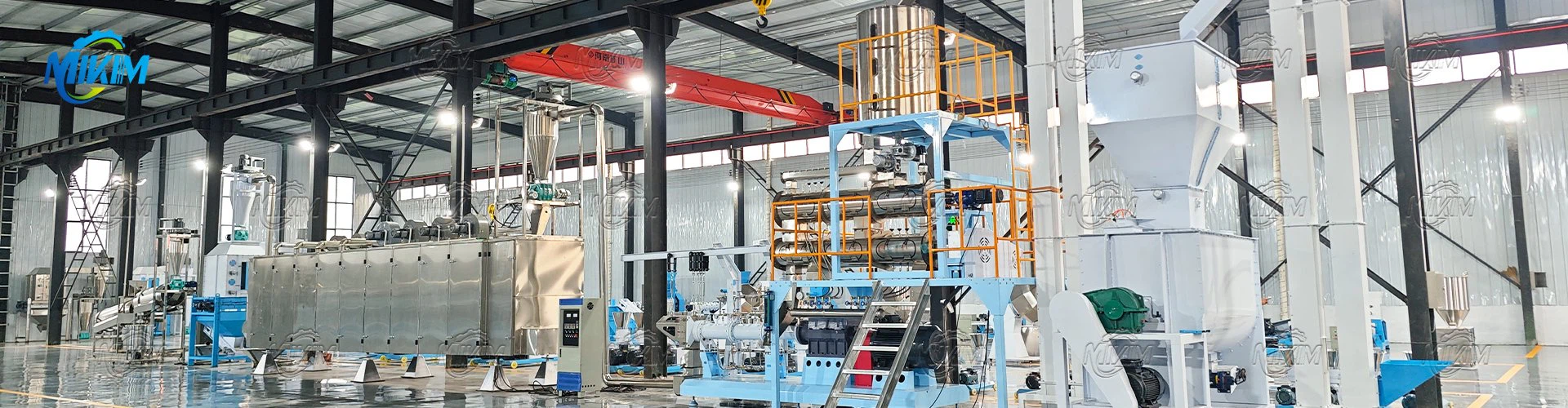
The Floating Fish Feed Extruder process helps reduce raw material costs by improving raw material utilization and expanding the range of usable raw materials. In traditional production processes, some raw material residues (such as meat and bone meal residues and grain bran) cannot be fully utilized due to insufficient processing capacity, resulting in waste. The powerful mixing and extrusion function of the extruder can fully integrate these residues with other raw materials, making them part of the nutritional composition of dog food.
Operating steps
Meanwhile, the small fish feed pellet making machine can process a variety of low-cost raw materials into high-quality dog food, thereby reducing reliance on expensive raw materials. For example, some local by-products (such as sweet potato pulp, soybean meal, and fish meal) are inexpensive yet nutritious, but are difficult to use directly in dog food production due to poor palatability or indigestion. The high-temperature, high-pressure process of the extruder can improve the palatability and digestibility of these raw materials.
Next is labor costs. As mentioned earlier, the small fish feed maker machine has high production efficiency and can significantly reduce the number of workers required. Furthermore, modern floating fish feed processing is equipped with an intelligent control system, enabling automatic parameter adjustment and fault alarms. This reduces the need for specialized technicians, simplifies operation, and allows ordinary workers to start working after a week of training, avoiding the high salary costs of hiring professional engineers.
Energy costs are another significant component of production costs. The new fish feed pellet processing utilizes energy-saving technology, effectively reducing energy consumption. Compared to older extruders, the new extruder reduces energy consumption by 25%-30% per ton of fish feed produced. Although the initial investment in the new energy-saving extruder is slightly higher, the accumulated energy cost savings can recover the additional investment within a year, resulting in significant long-term economic benefits.
In addition, floating fish food extruders can reduce product storage and transportation costs. Dog food produced through the extrusion process has good stability and a long shelf life because the high-temperature extrusion process removes moisture from the raw materials (the finished product moisture content is typically below 12%), making the product less prone to mold and reducing losses due to spoilage. Simultaneously, the porous structure of the extruded dog food makes it lighter, reducing transportation costs. For example, one ton of extruded dry dog food takes up less space than one ton of wet dog food, and transportation costs can be reduced by $50-100 per ton. A factory with an annual production capacity of 600 tons can save $30,000-60,000 in transportation costs annually.
In short, dog food extruders reduce total production costs across multiple stages, including raw materials, labor, energy, warehousing, and transportation, thereby significantly increasing product profit margins. In a fiercely competitive market, companies that effectively utilize the cost-reduction advantages of extruders will have stronger pricing competitiveness and more stable profitability. Therefore, choosing a high-quality dog food extruder and fully leveraging its cost-reduction advantages is an indispensable step in achieving profitability in dog food production.
Related equipment


about Us
Customer visit

Certificate of Honor

FAQ
1. What is the price of the dog food pellet maker?
The price ranges from approximately $1,500-$55,000
2. Do you provide maintenance services for your customers?
Yes, we offer comprehensive after-sales maintenance services to our customers.
If you would like to learn more about MIKIM machinery, please contact us. We offer one-stop service and welcome your inquiries!!!